Leaving a dog home alone is one of the most common sources of guilt and trouble for owners, and one of the most misunderstood. Dogs are social animals, but the great majority can learn to be calm and content on their own, provided you build that ability deliberately rather than assuming it. The problems, destruction, howling, accidents, usually come from too much alone time too soon, not from the alone time itself. This guide covers how to prepare a dog for being left, how long is reasonable, and how to prevent the separation distress that makes alone time miserable for everyone.
The honest principle is that being calm alone is a skill you teach gradually, not a switch that flips. Start small, build up slowly, and make the dog’s alone time genuinely tolerable, and most dogs cope well.
Build alone time gradually
The single biggest mistake is leaving a dog for a full day before it has learned to handle a few minutes. Alone time should be built up in small, patient steps so the dog never tips into panic.
- Start tiny: leave the room, then the home, for very short periods the dog handles calmly.
- Extend slowly: lengthen the absences gradually, staying within what the dog can manage.
- Keep it low-key: make departures and returns calm and unremarkable, not emotional events.
- Watch the dog’s response: back off if it shows distress, and build from a level where it stays relaxed.
Make alone time tolerable
A dog left with nothing to do and too much energy is set up to struggle. Prepare it so the time passes easily.
- Exercise the dog well before you leave, since a tired dog rests rather than frets; our guide to exercising a dog indoors helps here.
- Leave a long-lasting food puzzle or frozen stuffed toy to occupy its mind.
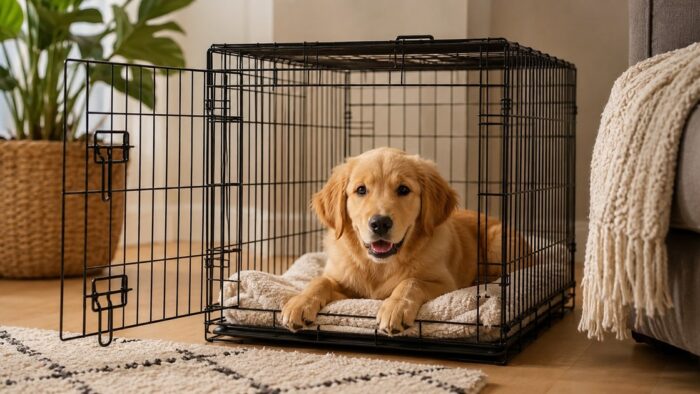
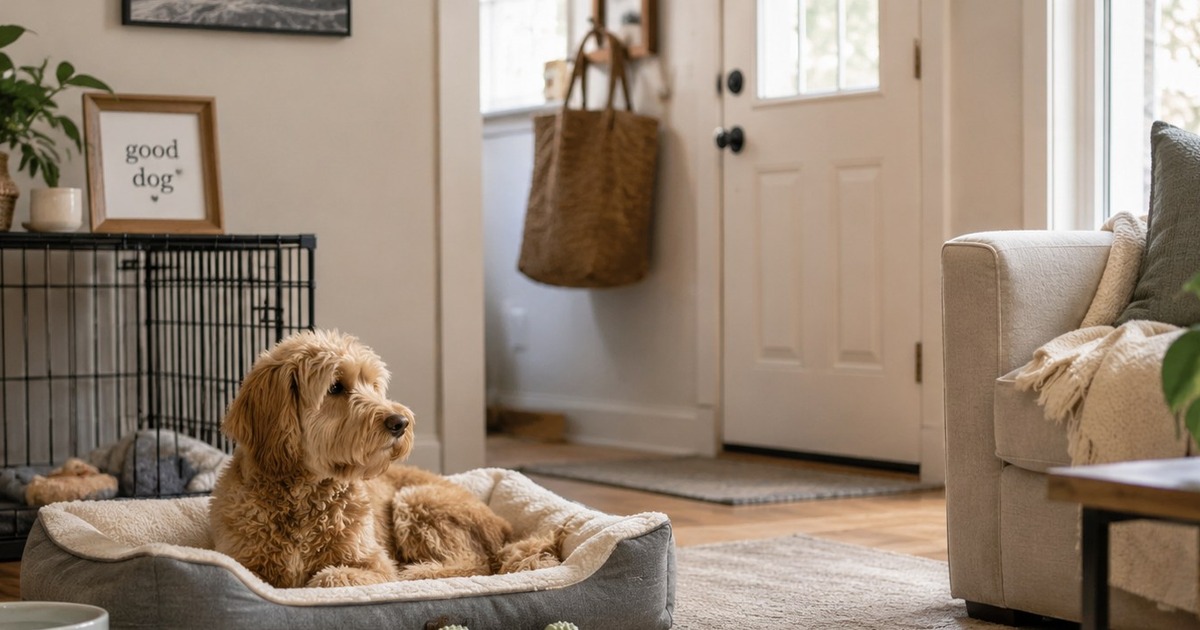
- Provide a comfortable, safe space, a crate or settled corner, that the dog associates with calm.
- Leave familiar background sound or a worn item with your scent for reassurance.
How long is too long?
There is no single number, but most adult dogs should not be left alone for very long stretches as a daily routine, and puppies need far more frequent breaks because of their physical limits and short attention spans. If your day is long, arrange a midday walk, a visit, or daycare rather than stretching the dog beyond what it can cope with. Pushing the duration is how calm alone time slides into distress.
Recognising separation anxiety
It is important to tell ordinary boredom apart from genuine separation anxiety, because they need different responses. True separation anxiety is real distress, not naughtiness, and it calls for the patient, structured approach, and sometimes professional help, set out in our guide to reducing pet anxiety naturally.
- Signs include frantic destruction focused on exits, persistent howling, drooling, or accidents in a house-trained dog.
- The behaviour starts soon after you leave and centres on your absence specifically.
- It does not improve with exercise and enrichment alone.
- Severe cases warrant veterinary input, since a vet can rule out medical causes and guide treatment.
Common mistakes
- Leaving a dog for long periods before it has learned to handle short ones.
- Making departures and returns emotional, which heightens the dog’s anxiety.
- Leaving the dog with no enrichment and too much pent-up energy.
- Punishing destruction or accidents that happened while you were out, which only adds fear.
- Mistaking genuine separation anxiety for misbehaviour and failing to address it properly.
Editor’s note
The guilt owners feel about leaving a dog is understandable, but the answer is preparation, not avoidance. A dog taught gradually to be alone, exercised first and left with something to do, usually settles and sleeps rather than suffers. The dogs that struggle are typically the ones thrown into long absences without that groundwork, or the ones with genuine separation anxiety that needs real, patient work. Build the skill in small steps, keep your comings and goings calm, and watch for the difference between boredom and distress. Get it right and alone time becomes a non-event for your dog.
Frequently asked questions
How long can I leave my dog home alone?
There is no universal figure, but most adult dogs should not be left alone for very long stretches as a daily habit, and puppies need much more frequent breaks. If your day is long, arrange a midday walk, visit, or daycare. Build up alone time gradually and judge by how calmly your dog copes.
How do I know if my dog has separation anxiety?
Separation anxiety shows as genuine distress soon after you leave: frantic destruction around exits, persistent howling, drooling, or accidents in a house-trained dog, and it does not ease with exercise alone. Ordinary boredom looks more like general mischief. Severe or worsening cases warrant a vet and possibly a behaviourist.
Should I get a second dog to keep mine company?
Not as a fix for separation anxiety, which is about your absence specifically and often persists even with another dog present. A second dog is a major commitment in its own right and can simply double the problem. Address the alone-time training first, and consider a companion only as a separate, well-considered decision.
What can I leave to keep my dog occupied?
A long-lasting food puzzle or a frozen stuffed toy works well, giving the dog a calming, absorbing task that helps it associate your departure with something good. Make sure anything you leave is safe to use unsupervised, durable and without small parts it could swallow, and rotate the items so they stay interesting rather than becoming ignored.
Should I leave the TV or radio on for my dog?
It can help some dogs, providing familiar background sound that masks startling outside noises and makes the home feel less empty. It is not a fix for genuine separation anxiety, but as part of a calm setup, alongside exercise and a good chew toy, gentle background sound reassures many dogs. Keep the volume low and the content calm rather than loud or jarring.
Is it cruel to leave a dog alone while I work?
Not if you prepare properly and keep the absences within what your dog can handle. Most dogs adapt well to a working owner when they are exercised beforehand, left with enrichment, and not alone for excessively long unbroken stretches. Arranging a midday walk or visit for long days, and building alone-time tolerance gradually, keeps it fair to the dog. Millions of dogs live happily with working owners; the key is preparation and reasonable limits, not constant company. Build the alone-time skill early and your dog will rest calmly through the working day.