The biggest problem with hamster keeping is that most of the cages sold for them are far too small, often a fraction of what a hamster actually needs. Hamsters are active, burrowing animals that run surprising distances and dig deep in the wild, and a cramped cage with a tiny wheel leaves them stressed, bored, and prone to repetitive behaviours. The single most important thing you can do for a pet hamster is give it a properly sized habitat with deep bedding and a good wheel. This guide explains how to set up a habitat that genuinely meets a hamster’s needs, rather than the inadequate kits commonly sold.
The honest principle is that habitat is almost everything for a hamster’s welfare. Get the size, the bedding depth, and the wheel right, and most of the stress behaviours people see in hamsters simply never appear.
Size: bigger than the shops suggest
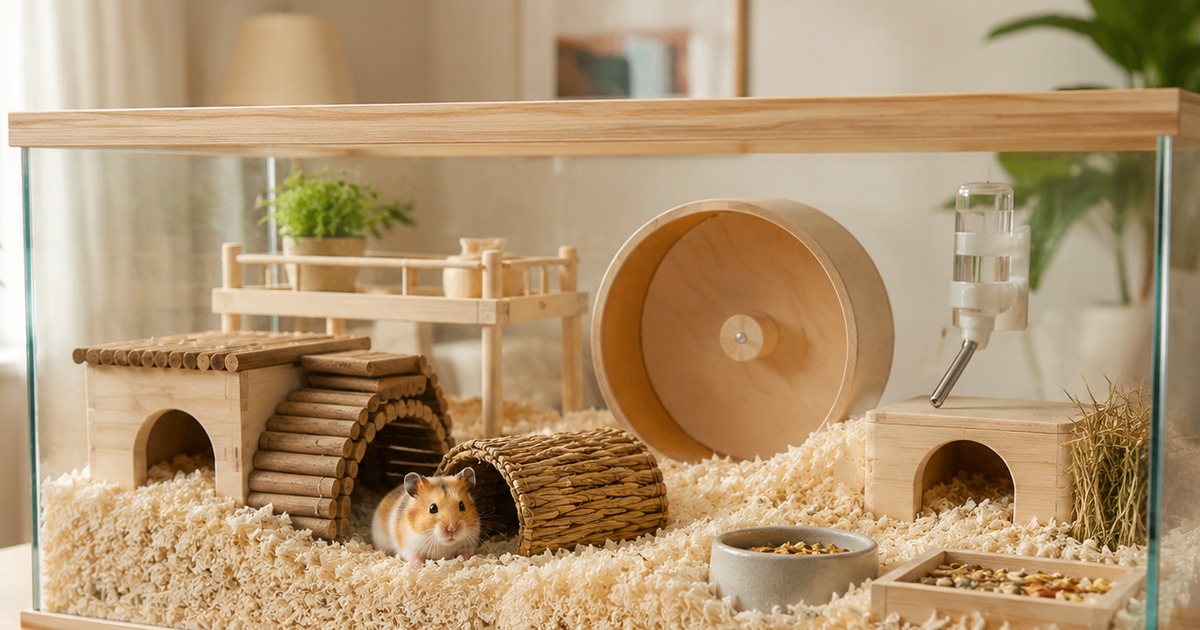
Floor space is what matters most, far more than levels or tubes, because hamsters run along the ground. A habitat should offer a large, continuous floor area, considerably bigger than the typical pet-shop cage, so the hamster can move and forage freely.
- Prioritise a large, unbroken floor area over height or fancy multi-level designs.
- Avoid the small starter cages and “modular tube” kits, which are usually far too cramped.
- A larger tank-style enclosure or a big bar cage with a deep base often works better than marketed kits.
- When in doubt, go bigger; cramped housing is the leading cause of hamster stress.
Deep bedding for burrowing
Hamsters are burrowing animals, and the chance to dig and tunnel is essential to their wellbeing, not optional. That means deep bedding, far deeper than the thin layer most cages come with, so the hamster can dig proper burrows. Use a suitable, dust-free, unscented bedding in a generous depth, and you will see the hamster engage in the natural digging and tunnelling behaviour that a shallow layer denies it. This single change transforms many hamsters’ quality of life.
The wheel and exercise
A hamster runs remarkable distances each night, so a good wheel is vital, and most supplied wheels are far too small, forcing the hamster to arch its back painfully. Choose a wheel large enough that the hamster can run with a flat, straight back, and a solid running surface rather than rungs that can trap feet. Beyond the wheel, supervised time in a safe playpen or a hamster-safe ball used briefly adds variety, though the habitat itself should provide most of the daily exercise and stimulation.
Enrichment and essentials
- A hideaway or nest box where the hamster can sleep and feel secure during the day.
- Chew items, since a hamster’s teeth grow continuously and need wearing down.
- A sand bath for grooming, which many hamsters use and enjoy.
- Foraging opportunities, scattering food rather than bowl-feeding, to engage natural behaviour.
Remember that hamsters are nocturnal and solitary, as covered in our wider small pet care guide, so house them alone and let them sleep undisturbed by day.
Placement and routine
Where you put the habitat matters for a hamster’s comfort. Place it somewhere calm, away from direct sun, draughts, and constant noise, and not somewhere the daytime bustle will repeatedly wake a sleeping, nocturnal animal. Handle and play with the hamster in the evening when it is naturally awake, building trust gently, and keep a steady routine. A calm, well-placed habitat with a predictable rhythm makes for a relaxed, confident hamster. Because hamsters hide illness like other prey animals, it is worth knowing the general signs a pet may be unwell and acting quickly on any change.
Common mistakes
- Buying the small cages and tube kits commonly sold, which are far too cramped.
- Providing only a thin layer of bedding, denying the hamster the chance to burrow.
- Using a wheel too small, forcing the hamster to run with an arched back.
- Housing hamsters together, when they are solitary and should live alone.
- Placing the habitat in a noisy, bright, or busy spot that disturbs a nocturnal animal.
Editor’s note
If you take one thing from this, let it be that the cage on the shelf with the cute hamster on the box is almost certainly too small, and the wheel inside it almost certainly too. Hamsters are not happy in cramped, shallow boxes; they need room to run, deep bedding to burrow into, and a wheel big enough to run with a straight back. Get those three right, place the habitat somewhere calm, and respect that the hamster is nocturnal and solitary, and you will have a far healthier, more active, less stressed pet than the standard setup ever produces.
Frequently asked questions
How big should a hamster cage be?
Considerably bigger than most pet-shop cages and kits, which are typically far too small. Prioritise a large, continuous floor area over height or tubes, since hamsters run along the ground. When choosing, err well above the minimums on the packaging, as cramped housing is the leading cause of stress and repetitive behaviour in hamsters.
Why does my hamster need deep bedding?
Because hamsters are burrowing animals that dig tunnels and nests in the wild, and deep bedding lets them express that essential natural behaviour. A thin layer denies them this and contributes to stress. Provide a generous depth of suitable, dust-free, unscented bedding so the hamster can dig proper burrows, which noticeably improves its wellbeing.
What size wheel does a hamster need?
Large enough that the hamster can run with a flat, straight back rather than an arched spine, since a too-small wheel causes discomfort and can harm the back over time. Choose a solid running surface rather than rungs or mesh that can injure feet. Most wheels supplied with cages are too small, so an upgrade is usually needed.
Can two hamsters live together?
For the commonly kept species, generally no. They are solitary and territorial, and housing them together often leads to serious, sometimes fatal, fighting. Each hamster should have its own habitat. This is a key difference from social small pets like guinea pigs and rabbits, and getting it wrong is a common and harmful mistake.
How often should I clean a hamster habitat?
Spot-clean soiled areas and refresh food and water daily or near-daily, and do a fuller bedding change periodically rather than too often, since completely stripping the habitat frequently destroys the hamster’s scent and burrows and causes stress. A balance of regular spot-cleaning with less frequent full cleans keeps the habitat hygienic without unsettling the hamster, which is exactly what a larger habitat with deep bedding makes easier to manage.