Many of the emergencies that bring pets to the vet are entirely preventable: a chewed cable, a swallowed object, a nibbled toxic plant, an open window. New pet owners tend to discover these hazards the hard way, after the fact, when a methodical walk through the home beforehand would have removed most of them in an afternoon. Pets, especially the young and the curious, explore with their mouths and get into everything, so the home has to be made safe for them. This guide goes room by room through the common dangers and how to remove them, so prevention replaces panic.
The honest principle is that a pet, particularly a puppy, kitten, or house rabbit, will investigate, chew, and climb into anything it can reach, so proofing means getting down to its level and removing temptation and danger before curiosity finds it.
Living areas
The rooms where pets spend most time hold the most everyday hazards, many of them easy to overlook until something goes wrong.
- Secure or hide electrical cables, which pets chew, risking shock and injury; this is a priority everywhere.
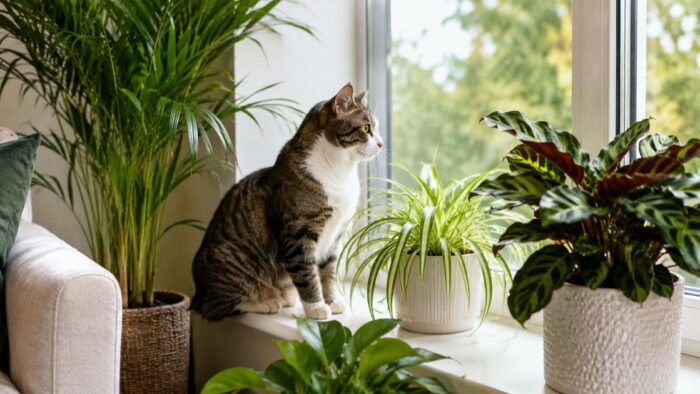
- Move toxic houseplants out of reach, since several common ones are poisonous to pets if chewed.
- Remove small swallowable objects, hair ties, coins, children’s toys, that a pet could ingest.
- Secure wobbly furniture and protect chewable corners, giving proper chew alternatives instead.
Kitchen
The kitchen combines food temptations with real dangers, so it deserves particular attention. Many human foods are toxic to pets, and bins are an irresistible hazard.
- Store food securely and learn which common human foods are toxic to pets, keeping them well out of reach.
- Use a secure, pet-proof bin, since scavenged scraps and packaging cause many emergencies.
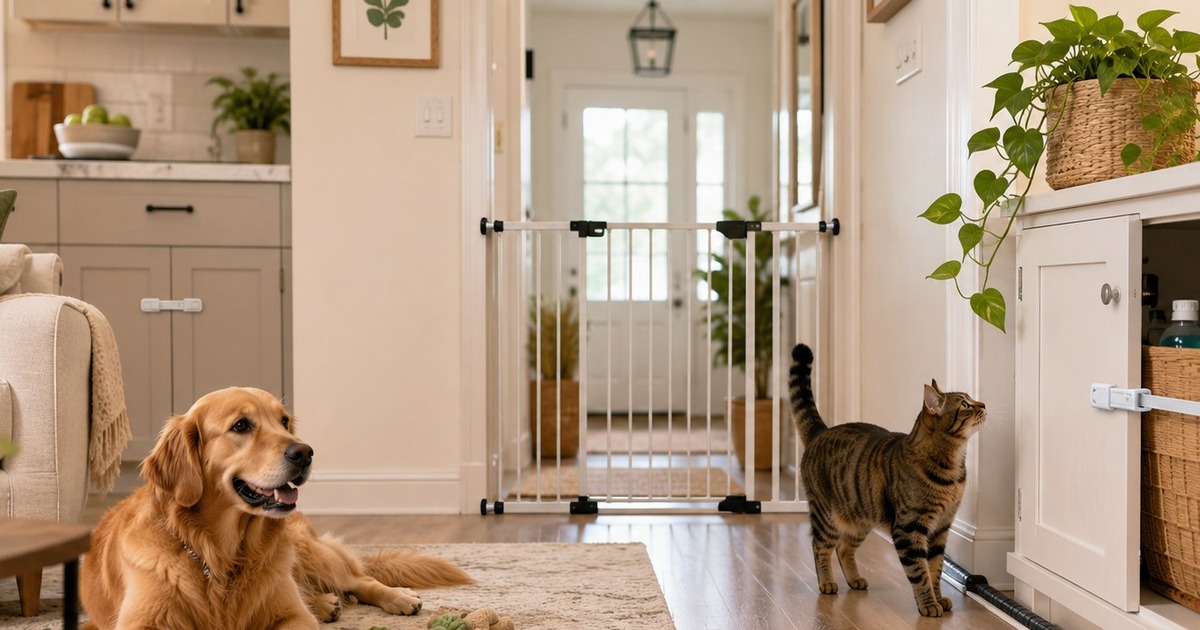
- Keep cleaning supplies behind closed, latched cupboards.
- Mind hot surfaces, open flames, and dangling cords from appliances.
Bathroom and utility areas
- Keep medicines, soaps, and chemical products in closed cabinets, never on reachable surfaces.
- Keep the toilet lid down, since pets may drink from it and small pets can fall in.
- Store laundry products securely, as some are highly toxic to pets.
- Be careful with small items like cotton buds and razors that a pet could swallow or be cut by.
Bedrooms, balconies, and windows
Bedrooms hide swallowable small objects, medications, and tempting wires, so apply the same level-by-level check there. Balconies and windows deserve special care in apartments: an unsecured window or balcony is a genuine fall risk, particularly for cats, which can slip or misjudge a leap. Secure windows with screens and never rely on a cat’s balance near a height. This is a core part of a safe pet-friendly apartment, alongside giving the pet its own secure space.
Species-specific extras
Different pets need a few specific precautions on top of the general proofing. A free-roaming rabbit, for instance, is a dedicated chewer that needs cables and skirting protected and safe chew items provided, as our guide to keeping a house rabbit explains. Cats need height-related hazards addressed; dogs need bins and chewables secured. Match the proofing to how your particular pet explores, and you cover the gaps a generic checklist would miss.
Common mistakes
- Leaving electrical cables exposed, the most common chewing hazard.
- Keeping toxic houseplants or human foods within a pet’s reach.
- Forgetting unsecured windows and balconies, a serious fall risk for cats.
- Storing medicines and chemicals on reachable surfaces.
- Proofing from standing height rather than getting down to the pet’s level.
Editor’s note
The single best pet-proofing technique is also the simplest: get down on the floor at your pet’s eye level and look around. Suddenly you see the dangling cable, the gap under the cabinet, the plant leaf within reach, the small object that rolled under the sofa, all the things invisible from standing height. Work through the home room by room before the pet arrives, or as soon as possible after, and you will prevent the great majority of household accidents. A safe home is not about wrapping the pet in cotton wool; it is about removing the obvious dangers so curiosity stays harmless.
Houseplants are a hazard worth handling on their own; see our guide to pet-safe houseplants and the ones to avoid.
Frequently asked questions
What are the most common household hazards for pets?
Exposed electrical cables, toxic houseplants, certain human foods, accessible medicines and cleaning chemicals, small swallowable objects, and unsecured windows or balconies. Most are easy to remove or secure, and doing so prevents the majority of preventable pet emergencies that vets see.
Which houseplants are toxic to pets?
Several common houseplants are toxic to cats and dogs if chewed, so check each plant against a reputable pet-safety list before keeping it. As a safe default, keep all plants out of reach and treat any plant you cannot confirm as safe as if it is not. If a pet eats part of a plant and you are concerned, contact your vet promptly.
How do I pet-proof for a new puppy or kitten?
Get down to their level and go room by room, securing cables, removing small swallowable objects and toxic plants, latching cupboards with food and chemicals, and blocking gaps and unsafe heights. Young animals are especially curious and chew everything, so be thorough, and provide plenty of appropriate chew toys to redirect that urge.
Do I need to pet-proof differently for cats versus dogs?
The basics overlap, but the emphasis differs. Cats climb and jump, so securing windows, balconies, and high hazards matters most, while dogs explore at floor level, so bins, chewables, and accessible food and objects are the priority. Rabbits and other small pets that roam need cables and skirting protected. Match the proofing to how your particular pet explores its world.
When should I pet-proof, before or after getting a pet?
Before, ideally, so the home is safe from the moment the pet arrives, or as soon as possible afterwards. Young animals especially get into everything immediately, so it is far better to remove hazards in advance than to react to a near-miss. Walk through each room at the pet’s eye level and address the dangers before curiosity finds them.
What should I do if my pet swallows something it should not?
Treat it as potentially urgent. If your pet swallows a foreign object, a toxic plant, a chemical, or a harmful food, contact your vet or an emergency clinic straight away rather than waiting for symptoms, since some items cause serious harm quickly. Do not try to make the pet vomit unless a vet directs you to, and have details of what was swallowed ready when you call. Quick action and clear information give your vet the best chance to help, so keep your clinic’s number and an emergency contact somewhere easy to find.