Plenty of dogs live happy, well-exercised lives without ever setting paw in a private yard, and plenty of dogs with big gardens are under-exercised because their owners assume the space does the work. Exercise is something you provide, not something a yard provides for you, and most of it can happen indoors with a little structure. The trick is to combine bursts of physical activity with the mental work that tires a dog even faster. This guide lays out how to genuinely exercise a dog indoors, with a realistic daily routine that keeps an apartment dog fit, settled, and out of trouble.
The honest principle is that a dog needs its energy met every day, and indoors that means deliberate, structured activity rather than leaving the dog to mooch about. Done right, a flat can keep a dog as fit and content as any garden.
Why indoor exercise works
Dogs do not need acres; they need their physical and mental energy discharged. Short, intense indoor activity, combined with daily walks, meets that need, and adding mental challenges multiplies the effect because problem-solving tires a dog deeply. A dog that is both walked and mentally worked settles far better than one merely let loose in a yard, which is why structure beats space.
Physical activity indoors
- Hallway fetch: a long corridor is a ready-made fetch lane; use soft toys to protect walls and floors.
- Tug-of-war: a superb energy burner that also builds engagement when played with simple rules.
- Stair games, where safe: sending a dog up and down to retrieve tires it quickly.
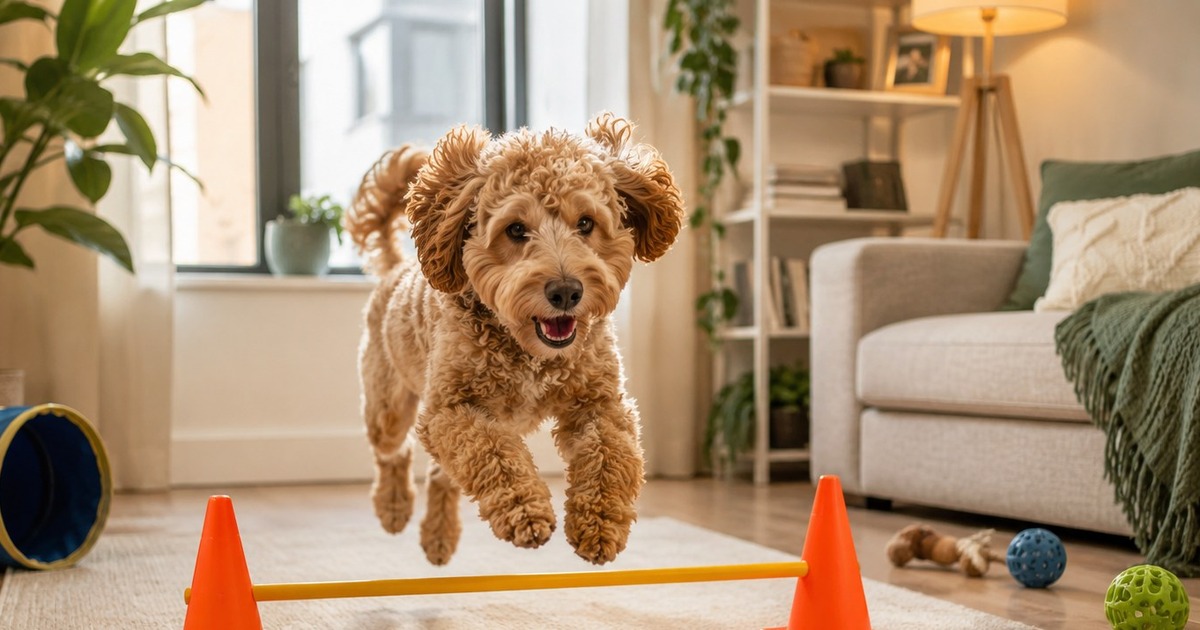
- Indoor obstacle course: cushions, chairs, and tunnels the dog weaves through and over.
- Find-it sprints: tossing treats for the dog to dash after combines movement and scent.
Mental exercise that doubles the effect
Physical activity alone rarely satisfies a high-energy dog; the mind must be worked too. Mental enrichment is the secret to a settled indoor dog, and it pairs naturally with the activities in our guide to indoor activities for energetic dogs.
- Food puzzles and treat-dispensing toys that make the dog think for its meal.
- Scent work, hiding treats around the room for the dog to sniff out.
- Short training sessions teaching new commands or tricks, which tire the brain fast.
- Frozen stuffed toys for a long, calming chew.
A realistic daily routine
- Morning: a walk, then a short training or scent game to start the day satisfied.
- Midday: a food puzzle or frozen toy to occupy a quiet stretch.
- Afternoon: a burst of indoor fetch or tug to discharge built-up energy.
- Evening: a second walk, then calm enrichment to wind down for the night.
Adjust the intensity to the breed and age; the structure matters more than the exact activities, and consistency is what keeps a dog calm.
Matching exercise to the dog
How much and what kind of exercise a dog needs varies enormously, and matching it to the individual prevents both under-exercise and injury. A high-energy young dog needs far more than a senior or a flat-faced breed that overheats easily. Knowing your dog’s needs is part of choosing well in the first place, as our guide to the best indoor dog breeds for apartments explains, and tailoring the routine keeps every dog safe and satisfied.
Common mistakes
- Relying on a yard or a single walk and assuming the dog is exercised enough.
- Doing only physical activity and ignoring the mental work that tires dogs fastest.
- Using hard toys indoors that damage the home or the dog.
- Over-exercising a puppy, senior, or flat-faced breed that cannot handle it.
- Skipping a routine, so the dog never settles into a predictable rhythm.
Editor’s note
The dogs that struggle indoors are almost never struggling for lack of a garden; they are struggling for lack of a plan. A dog left to entertain itself in a flat gets bored and destructive, while a dog given two walks, a couple of bursts of indoor play, and some daily mental work is calm and content in the same space. Build the routine, vary the games, and lean on mental enrichment as much as physical activity. Do that and “no yard” stops being a problem and becomes simply how your well-exercised, well-behaved dog happens to live.
Frequently asked questions
Can a dog get enough exercise living indoors?
Yes, with a deliberate routine. Combine daily walks with indoor activity, fetch, tug, an obstacle course, and mental enrichment like food puzzles and training. Most dogs need their energy met rather than a specific amount of space, and a structured indoor routine does that well.
How much exercise does my dog need each day?
It depends heavily on breed, age, and health. High-energy breeds may need a couple of hours of combined activity, while lower-energy or senior dogs need much less. Watch your dog: one that is restless and destructive needs more, while one that is tired and content is getting enough. Tailor it to the individual.
What indoor activities tire a dog out fastest?
Mental challenges, food puzzles, scent games, and training, tire a dog faster than physical play alone, because problem-solving is mentally exhausting. Combine a short burst of physical activity like fetch or tug with a mental task and most dogs settle quickly afterwards.
Is it safe to let my dog run up and down stairs?
For healthy adult dogs, controlled stair games can be good exercise, but use caution. Avoid them with puppies whose joints are still developing, with senior dogs, and with long-backed or large heavy breeds prone to joint problems, and never let a dog charge down stairs at speed where it could slip or injure itself. When in doubt about your dog’s suitability, check with your vet.
Do indoor dogs still need daily walks?
Yes. Indoor activity supplements walks but does not replace them, because walks provide not just exercise but mental stimulation, scents, and social experience that a flat cannot. Most dogs need at least one or two walks a day for their physical and psychological health, with indoor games filling the gaps and burning extra energy between outings.
Can older or low-energy dogs skip the indoor games?
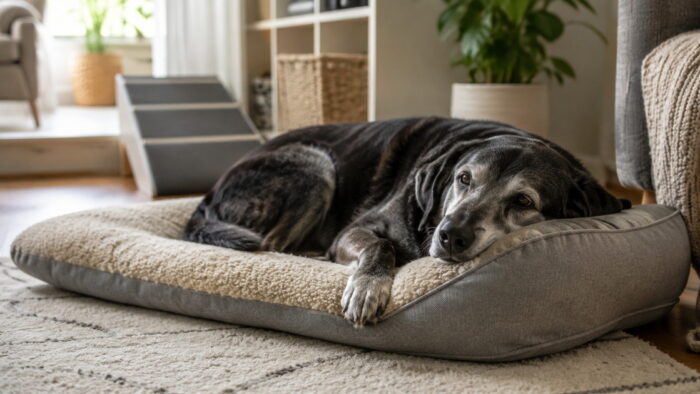
They still benefit, just at a gentler level. A senior or naturally calm dog needs less intense activity, but light play, short walks, and easy mental enrichment like a simple food puzzle keep its body and mind healthy and prevent the stiffness and boredom that come with doing nothing. Scale the activity to the individual rather than dropping it. A gentle daily routine keeps an older dog mobile, comfortable, and mentally engaged for far longer than inactivity would.