An energetic dog with nothing to do indoors does not simply relax; it finds its own entertainment, usually in the form of chewed furniture, frantic barking, and pacing. The mistake most owners make is thinking only about physical exercise, when a dog’s mind tires faster and more completely than its body. Ten minutes of hard thinking can settle a dog that a long walk barely touched. This guide covers the indoor activities that genuinely satisfy a high-energy dog, both physical and mental, so a rainy day or a small space does not turn into a destroyed one.
The honest principle is that a tired dog is a good dog, and the fastest route to tired is mental work, not just movement. Combine the two and even a demanding breed can be content indoors.
Mental enrichment tires dogs fastest
Problem-solving drains energy in a way running cannot, because it engages the dog’s brain fully. These activities are the secret weapon for energetic dogs in small spaces.
- Food puzzles and treat-dispensing toys that make the dog work for its meal; see our guide to puzzle feeders.
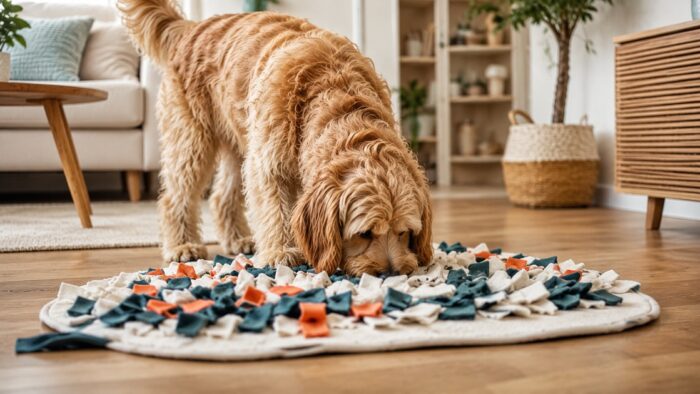
- Scent games, hiding treats around a room and letting the dog sniff them out, which is deeply satisfying work.
- Short training sessions teaching new tricks, which combine mental effort with bonding.
- Frozen stuffed toys that take the dog a long time to work through.
Physical activity without a yard
You can burn real energy indoors with a little creativity, even in a flat. The key is short, intense bursts rather than expecting a small space to substitute for a run.
- Indoor fetch down a hallway or between rooms, using soft toys that will not damage anything.
- Tug-of-war, a great energy burner that also builds engagement when played with rules.
- A simple homemade obstacle course using cushions and furniture for the dog to navigate.
- Stair games, where safe, sending the dog up and down to fetch, which tires it quickly.
For a fuller routine that combines indoor and outdoor energy outlets, see our guide to exercising your dog indoors, which sets out a daily plan.
Training as enrichment
Teaching the dog new skills is one of the most underused forms of enrichment, since it tires the mind, strengthens your bond, and produces a better-behaved dog all at once. A short daily session learning tricks or practising commands does more to settle an energetic dog than people expect. Using a clear reward marker makes it efficient, as our guide to clicker training basics explains.
Rotating toys to keep them interesting
A dog with ten toys out at once is bored of all of them; a dog given two that change weekly finds them endlessly novel. Keep most toys put away and rotate a small selection, which makes old toys feel new again at no cost. Match the toy to the dog’s style, chewers, chasers, shredders, and choose durable interactive toys that hold up to enthusiasm.
Building a daily routine
- Morning: a walk plus a short training or scent session to start the day settled.
- Midday: a food puzzle or frozen toy to occupy the dog through a quiet stretch.
- Evening: active indoor play, fetch or tug, followed by calm time to wind down.
- Throughout: rotate toys and vary the games so nothing becomes stale.
Common mistakes
- Relying on physical exercise alone and ignoring the mental work that tires dogs fastest.
- Leaving all the toys out at once, so none holds the dog’s interest.
- Expecting a small space to replace exercise, rather than combining bursts of activity with enrichment.
- Skipping training, which is both enrichment and the route to a calmer dog.
- Giving up on a “hyper” dog that is really just under-stimulated.
Editor’s note
If your energetic dog is driving you up the wall indoors, the answer is almost never more walking; it is more thinking. Owners exhaust themselves trying to physically tire a high-energy dog, when twenty minutes split between a food puzzle, a scent game, and a short training session would settle it far more effectively. Make mental enrichment the core of the day, add bursts of indoor play, and rotate the toys to keep it all fresh. A demanding dog is not a problem to endure but an intelligent animal asking for a job, so give it one.
For days when a walk is not enough, scent work tires a dog’s mind fast; see our guide to snuffle mats and scent games.
Frequently asked questions
How do I tire out a high-energy dog indoors?
Combine short bursts of physical play, indoor fetch, tug, an obstacle course, with mental enrichment like food puzzles, scent games, and training. Mental work tires a dog faster than physical exercise, so do not rely on movement alone, especially in a small space.
Is mental stimulation really as important as exercise?
For an energetic dog, often more so. Problem-solving and training engage the brain fully and produce a deeper, calmer tiredness than a walk alone. A combination of both is ideal, but mental enrichment is the part most owners neglect and the one that settles a restless dog quickest.
What can I do on a rainy day with an active dog?
Plenty indoors: hide treats for a scent hunt, set up a cushion obstacle course, play hallway fetch with soft toys, teach a new trick, or give a food puzzle or frozen stuffed toy. A rotation of these keeps an active dog satisfied without a single step outside.
My dog destroys things when left alone; what should I do?
Destruction usually signals boredom, excess energy, or anxiety. Make sure the dog is well exercised and mentally tired before you leave, provide a long-lasting food puzzle or frozen toy to occupy it, and remove tempting targets. If the destruction is paired with signs of distress, it may be separation anxiety, which needs the gradual, patient approach covered in our anxiety guide and, if severe, a vet’s input.
How long should I leave an energetic dog alone?
It depends on the dog, but most adult dogs should not be left alone for very long stretches without a break, and energetic dogs cope worst with boredom. Before leaving, exercise the dog and provide a long-lasting food puzzle or frozen toy to occupy it. If your day is long, arrange a midday walk or visit, since a chronically under-stimulated dog left for hours is where most destructive behaviour begins.
Are food puzzles really that effective?
Yes, they are among the most effective enrichment tools there is, because making a dog work out how to extract food engages its problem-solving mind and slows fast eaters. A puzzle that takes a dog twenty minutes of focused effort tires it more than a far longer walk, which is why they are a staple for keeping energetic dogs settled indoors.