House training is the first real test of life with a puppy, and most of the frustration around it comes from unrealistic expectations rather than a difficult dog. A young puppy physically cannot hold it for long, learns only through consistent routine, and has accidents as a normal part of the process, not a sign of stubbornness. The owners who succeed fastest are simply the most consistent. This guide lays out a realistic, no-punishment plan that works, the timeline you should actually expect, and how to handle the inevitable setbacks without losing your patience or confusing the puppy.
The honest principle is that you are not training the puppy so much as managing its environment and routine until its body and habits catch up. Get the routine right and house training mostly happens on its own; get impatient and punish, and you slow everything down.
How house training actually works
Puppies thrive on predictability and learn by repetition. The method is simple: take the puppy to the right spot at the right times, reward success immediately, and prevent accidents through supervision and timing, never punishment.
- Take the puppy out on a strict schedule: after waking, after eating, after play, and regularly in between.
- Reward the moment it goes in the right place, so it connects the spot with good things.
- Supervise closely indoors and watch for the signs, circling, sniffing, restlessness, that mean it needs to go.
- Prevent accidents rather than reacting to them, using management and timing.
Using a crate the right way
A crate, used kindly, is the most effective house-training tool there is, because dogs avoid soiling where they sleep. A correctly sized crate becomes a safe den and helps the puppy learn to hold it for appropriate periods. It must never be used for punishment or for too long. Choosing and introducing one is covered in our guide to the best dog crates for apartments, and done right it speeds the whole process.
A realistic timeline
Set your expectations correctly and the process feels far less frustrating. Very young puppies have tiny bladders and need frequent trips; control builds gradually with age. Most puppies are reliably trained over a span of weeks to a few months, with occasional accidents normal well into that period. Progress is rarely a straight line, so judge by the trend over weeks, not any single bad day.
Handling accidents calmly
- Never punish, scold, or rub the puppy’s nose in it; this teaches fear, not cleanliness.
- If you catch it in the act, calmly interrupt and take it to the right spot, then reward.
- Clean accidents thoroughly with an enzyme cleaner so no scent remains to draw the puppy back.
- Treat an accident as a management failure on your part, not misbehaviour on the puppy’s.
Building good habits beyond the basics
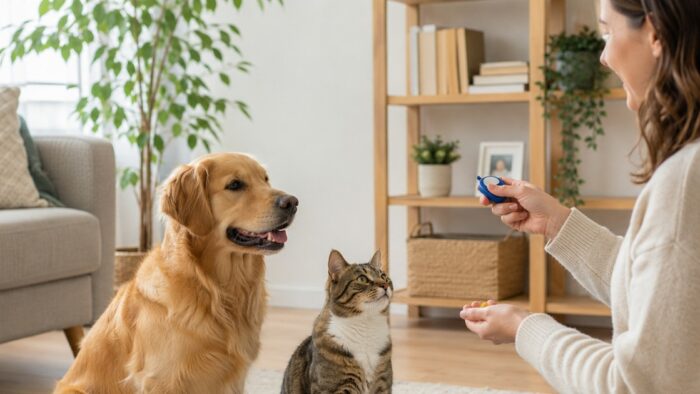
House training runs alongside the puppy’s wider education, and the same calm, reward-based approach applies throughout. Teaching a marker for good behaviour, as in our guide to clicker training basics, makes rewarding the right moment precise and clear. Setting the home up sensibly, as in our guide to creating a pet-friendly apartment, removes temptations and makes supervision easier while the puppy learns.
Common mistakes
- Punishing accidents, which teaches the puppy to hide rather than to hold.
- Expecting too much too soon from a puppy whose bladder is still tiny.
- Skipping the strict schedule, so the puppy never learns a pattern.
- Cleaning accidents poorly, leaving a scent that invites repeats.
- Giving the puppy unsupervised freedom before it has earned it.
Editor’s note
House training is far more about your consistency than your puppy’s intelligence. The owners who struggle are almost always the ones who skip the schedule, punish the accidents, or expect a twelve-week-old to behave like an adult dog. Take the puppy out relentlessly on routine, reward every success the instant it happens, manage the environment to prevent mistakes, and stay patient through the setbacks. Do that and the puppy trains itself faster than you would believe. Lose your temper and reach for punishment, and you simply teach it to fear you and hide the evidence.
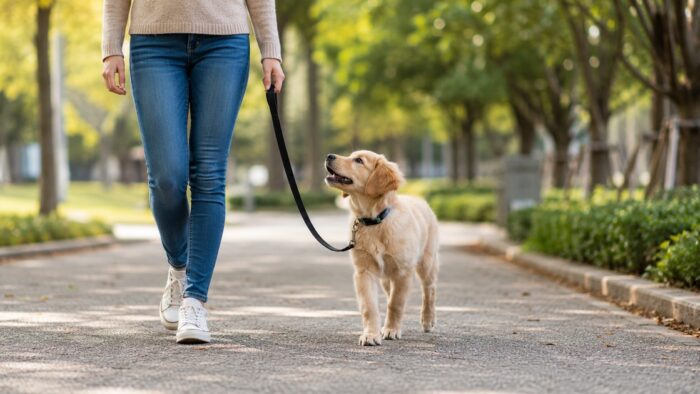
House training works best alongside two other early skills: settling in a crate and walking nicely on the lead, which we cover in our guides to crate training a dog and loose-leash walking.
Frequently asked questions
How long does it take to house train a puppy?
Usually several weeks to a few months, depending on the puppy and your consistency. Very young puppies need frequent trips outside because their bladders are small, and reliability builds gradually with age. Occasional accidents are normal well into the process.
Should I punish my puppy for accidents?
No. Punishment teaches the puppy to fear you and to hide when it needs to go, which makes training harder. Instead, clean thoroughly, prevent accidents through supervision and routine, and reward the puppy generously when it goes in the right place.
Is crate training necessary for house training?
It is not strictly necessary but is highly effective, because dogs avoid soiling where they sleep. A correctly sized crate used kindly as a den helps the puppy learn control. It must never be used as punishment or for excessively long periods.
Why has my house-trained puppy started having accidents again?
Regression is common and usually has a cause: a change in routine or home, too much unsupervised freedom granted too soon, incomplete cleaning that left a scent, or sometimes a medical issue such as a urinary infection. Tighten the routine and supervision again, and if the regression is sudden or persistent, have your vet rule out a medical cause.
Can I house train an adult dog the same way?
Yes, the principles are identical: a strict routine, rewarding success, preventing accidents, and no punishment. Adult dogs have better bladder control, so they often progress faster than puppies, though a dog with ingrained habits or a past of being kept in unsanitary conditions may need extra patience and consistency to relearn.
How often should I take my puppy outside?
Very frequently at first: after waking, after eating, after play, and roughly every hour or two in between for a young puppy, since its bladder is small. A common guide is that a puppy can hold it for only a limited stretch related to its age, so frequent, scheduled trips, plus immediate rewards for success, are the heart of the method.
Do puppy training pads help or hinder house training?
They can do either. Pads are useful when a puppy genuinely cannot get outside often enough, such as in a high-rise, but they can also teach a puppy that going indoors is acceptable, which then has to be untrained. If your goal is outdoor toileting, it is usually cleaner to take the puppy out frequently from the start and use pads only where truly necessary.