Cats need vertical space the way dogs need walks, it is not optional enrichment but a core part of feeling safe and content. The problem is that most cat trees are bulky, unstable, and frankly ugly, which is why so many owners of small flats skip them and end up with a cat that climbs the curtains instead. The good news is that you can give a cat excellent vertical territory without surrendering your living room, if you choose well. This guide covers how to pick climbing furniture that fits a small space, suits your cat, and that the cat will actually use.
The honest principle is that cats value height and stability above all, and a small, sturdy, well-placed perch beats a tall, wobbly tower the cat distrusts. Choose for what the cat wants, not just what looks impressive.
Why vertical space matters so much
Climbing and perching are deep feline instincts tied to safety, territory, and observation. A cat with height feels secure and in control, while one stuck at floor level can become stressed or territorial. Vertical space also multiplies usable territory in a small flat, letting a cat “own” more without needing more floor area, which is central to keeping an indoor cat happy.
What to look for
- Stability above all: a wobbly tree frightens cats and goes unused; it must be solid and well-based.
- Height in a small footprint: tall and narrow, or wall-mounted, gives vertical space without eating the floor.
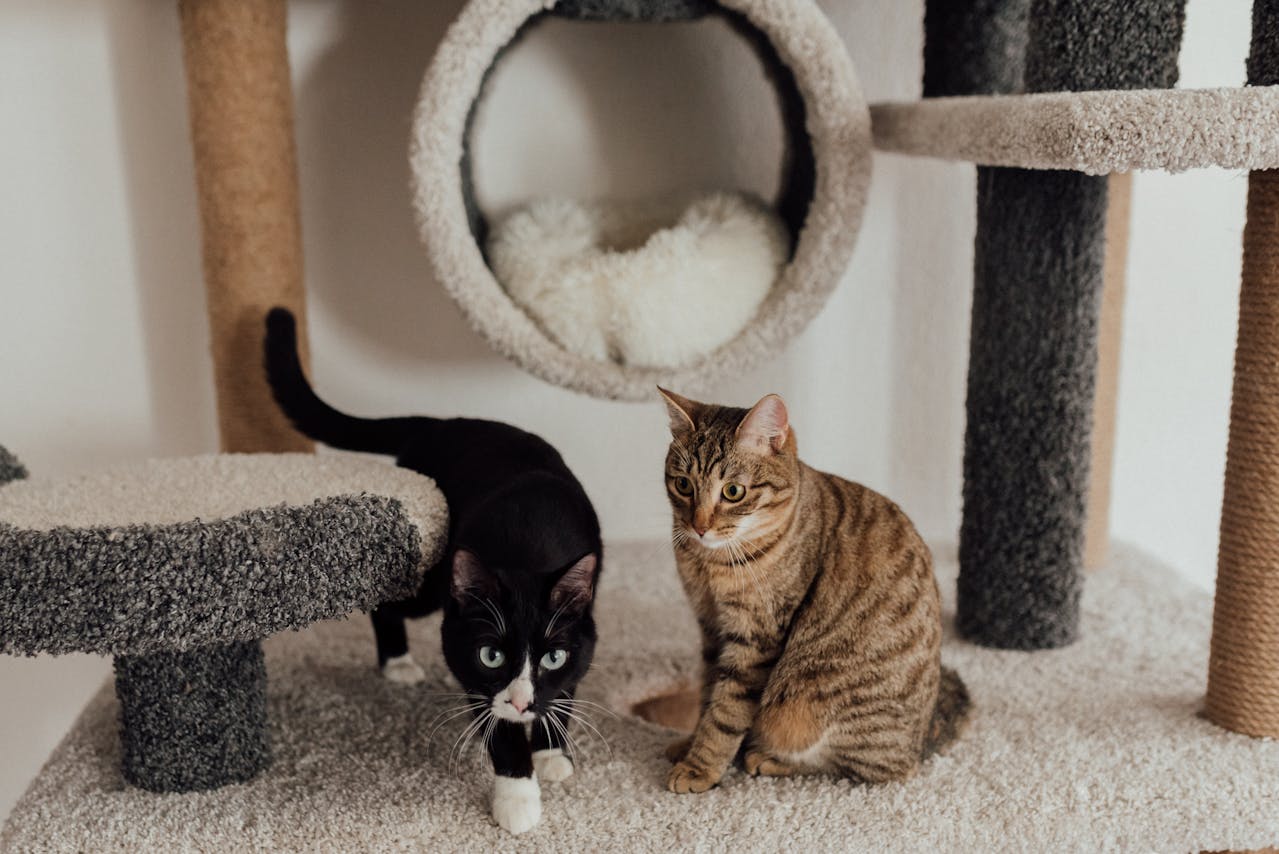
- Multiple levels and a hideaway: perches at different heights plus an enclosed spot to retreat.
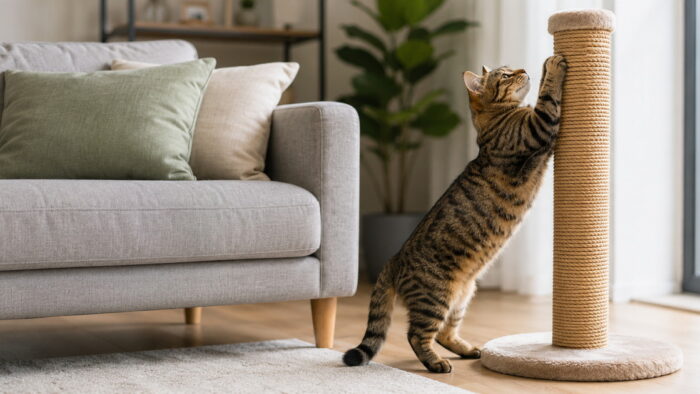
- Sturdy scratching surfaces: integrated posts let the tree double as a scratching and enrichment station.
- Materials that last: quality covering and posts that survive years of use.
Options for small spaces
Tall, narrow trees
A floor-to-near-ceiling tree with a small base gives maximum height for minimal floor space, ideal for a flat. Stability is the thing to check, narrow trees can wobble if poorly made, so look for a sturdy base or a ceiling brace.
Wall-mounted shelves and steps
Wall-mounted perches and steps use space that is otherwise wasted, creating a climbing route up a wall with no floor footprint at all. They look cleaner than a traditional tree and can be arranged to suit your room, though they need secure fixing.
Window perches
A window perch combines height with the best free entertainment a cat can have, a view of the outside world. Compact and inexpensive, it is a perfect addition to any small-space setup.
Placement makes or breaks it
Even the best cat tree fails in the wrong spot. Cats want height where the action is, or where they can watch it safely, so placement is half the battle.
- Put the tree or perch near a window for the all-important view.
- Place it where the cat already likes to be, not tucked away in an unused room.
- Give the cat a route up that feels safe and stable, with no big, intimidating gaps.
- Avoid high-traffic spots if the cat wants the perch as a calm retreat.
Common mistakes
- Buying a tall but wobbly tree the cat is too wary to use.
- Providing no vertical space at all in a small flat, then blaming the cat for climbing curtains.
- Placing the tree in an unused corner the cat never visits.
- Choosing looks over stability and sturdy scratching surfaces.
- Skipping a window perch, the cheapest and most-used option of all.
Editor’s note
The cat trees that go unused are almost always the ones bought for the wrong reasons, tall for show but wobbly, or stylish but stuck in a room the cat never enters. Cats care about two things: is it stable, and is it where I want to be? Choose a sturdy tree or wall shelves with a small footprint, put them by a window where the action is, and add a cheap window perch as well. Get height into a small flat this way and a previously restless, curtain-climbing cat suddenly has somewhere proper to be king of.
Frequently asked questions
Do cats really need a cat tree?
They need vertical space, which a cat tree, wall shelves, or window perches all provide. Climbing and perching are core feline instincts tied to safety and territory, and a cat without any height often becomes stressed or starts climbing furniture and curtains instead.
How do I fit a cat tree in a tiny apartment?
Choose a tall, narrow tree with a small base, or use wall-mounted shelves and a window perch, which add height with little or no floor footprint. Vertical space is about height, not floor area, so even the smallest flat can offer a cat plenty of climbing territory.
Why won’t my cat use its cat tree?
Usually because it feels unstable or is in the wrong place. Cats avoid wobbly furniture, so check it is solid, and move it near a window or to a spot the cat already likes. Rubbing a little catnip on it or placing treats on the levels can encourage a hesitant cat to explore.
Are wall-mounted cat shelves safe?
Yes, when fixed securely into the wall to hold the cat’s weight plus the force of jumping. Use proper fixings rated well above the cat’s weight, space the steps so the cat can climb comfortably, and add a soft landing below where sensible. Properly installed, wall shelves are stable, space-saving, and popular with cats.
How tall should a cat tree be?
Taller is generally better for satisfying a cat’s climbing instinct, but stability matters more than height. A tall, wobbly tree will go unused, while a shorter, rock-solid one will be loved. In a small flat, a tall, narrow, well-based tree, or one braced to the ceiling, gives maximum height without taking much floor space, which is the ideal combination.
Will a cat tree help with scratching problems?
It can, if it includes sturdy, tall scratching posts, because it gives the cat an acceptable outlet near where it likes to be. Cats often scratch to mark territory and stretch, so a post built into a climbing structure they already use is a natural target. Place it where the cat tends to scratch and reward its use to redirect the behaviour away from furniture.
How do I introduce a new cat tree?
Make it appealing rather than forcing the cat onto it. Place it where the cat already likes to spend time, ideally near a window, and encourage exploration with treats placed on the levels or a little catnip rubbed on the posts. Play near and on it so the cat associates it with good things. Most cats take to a stable, well-placed tree within a few days once it feels safe and rewarding.