A pet-friendly apartment is not about matching bowls and a cute bed; it is about designing a small shared space so that your pet is safe and stimulated and you are not driven slowly mad. Done badly, a flat with a pet becomes a battleground of chewed cables, scratched doors, and nowhere for anyone to escape. Done well, it works for both of you, with the pet having its own territory and the home protected from the predictable damage. This guide covers how to set up an apartment so it genuinely suits living with a dog, cat, or small pet.
The honest principle is that most pet “problems” in apartments are really design problems. Give the pet its own space, remove the temptations, and protect the surfaces, and the daily friction largely disappears.
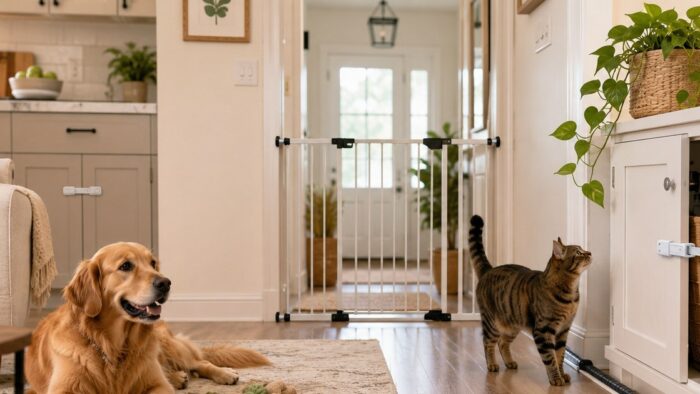
Give the pet its own territory
Every pet needs a defined space that is unmistakably its own, which reduces stress and gives it somewhere to settle. In a small flat this matters more, not less, because space is shared so tightly.
- A dedicated bed or crate in a quiet corner, away from the front door and foot traffic.
- For cats, vertical territory, perches and a cat tree, so they can claim height.
- A consistent feeding station that is the pet’s alone, not moved around.
- A retreat the pet can withdraw to undisturbed, which also helps with anxiety.
Pet-proof against the predictable
Most apartment damage is entirely foreseeable, so prevent it rather than reacting to it. A short proofing session saves months of frustration and protects your deposit. The full room-by-room approach is in our guide to pet-proofing your home, but the essentials apply everywhere.
- Secure or hide cables, which dogs chew and cats bat, both a hazard and an expense.
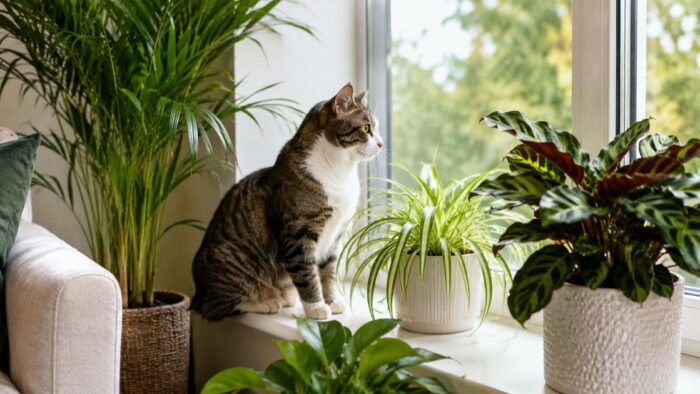
- Move houseplants out of reach, since several common ones are toxic to pets.
- Store food, cleaning supplies, and small swallowable objects behind closed doors.
- Protect chewable furniture corners and provide proper chew or scratch alternatives.
Protect floors and surfaces
Apartment floors and walls take the brunt of pet life, and a little protection preserves both your home and your relationship with the landlord. Washable rugs over hard floors catch accidents and muddy paws, scratch guards protect door frames, and easy-clean materials make the inevitable mess manageable. Keeping on top of shed hair is part of this too, with practical methods in our guide to dealing with pet hair.
Manage noise and neighbours
Shared walls make noise the defining apartment challenge. A pet that barks, howls, or thunders about disturbs neighbours and risks complaints, so build calm into the setup. A predictable routine, enough exercise and enrichment so the pet is not frantic, and a quiet retreat all reduce noise at the source. A well-exercised, well-settled pet is a quiet one, which keeps the peace on both sides of the wall.
Common mistakes
- Skipping pet-proofing and then paying for chewed cables and damaged furniture.
- Giving the pet no defined space of its own in an already cramped flat.
- Leaving toxic houseplants within reach.
- Ignoring noise until a neighbour complains.
- Choosing decor and materials that cannot survive normal pet life.
Editor’s note
The happiest pet-friendly apartments I have seen share one thing: the pet has a clear place of its own, and the home has been proofed against the obvious. People spend on cute accessories while leaving cables exposed and giving the pet nowhere to retreat, then wonder why it is anxious and destructive. Set up the territory first, proof against the predictable damage, protect your floors, and build a routine calm enough to keep the neighbours happy. Get the bones right and a small flat is a perfectly good home for a pet, for both of you. Set up the territory, proof against the predictable, protect the surfaces, and keep the routine calm, and the space simply works.
Frequently asked questions
How do I pet-proof a small apartment?
Secure or hide cables, move toxic plants out of reach, store food and chemicals behind closed doors, and remove small swallowable objects. Then protect chewable furniture and give the pet proper chew or scratch alternatives. A short, systematic proofing session prevents most predictable damage and hazards.
How can I keep my apartment from smelling of pet?
Stay on top of the basics: clean litter and bedding frequently, manage shed hair regularly, ventilate the space, and clean accidents thoroughly with an enzyme cleaner that removes odour rather than masking it. Consistent, frequent cleaning prevents odours from building up far better than air fresheners.
Can I have a pet in a small apartment without damaging it?
Yes, with preparation. Give the pet its own space, proof against chewing and scratching, protect floors and door frames, and provide enough exercise and enrichment that the pet is not acting out from boredom. Most apartment damage is predictable and preventable with a sensible setup.
How do I stop my pet disturbing the neighbours?
Tackle the cause rather than the symptom. A pet that is well exercised, mentally stimulated, and on a predictable routine is far quieter than a bored or anxious one. Give it a calm retreat, address barking or howling early with training, and avoid leaving it alone for longer than it can comfortably handle. A settled pet rarely generates the noise that leads to complaints.
What flooring is best for a pet-friendly apartment?
Hard, easy-clean floors like sealed wood-effect laminate, vinyl, or tile cope far better with pets than carpet, since they resist stains, odours, and embedded hair. Add washable rugs for traction and comfort, especially for older dogs that can slip on smooth surfaces. The aim is a floor you can wipe clean quickly and that survives the occasional accident without lasting damage.
Which common houseplants are toxic to pets?
Several popular houseplants are toxic to cats and dogs if chewed, so it is worth checking each plant against a reputable pet-safety list before bringing it home. As a general rule, keep all houseplants out of a pet’s reach where possible, and if you are unsure whether a plant is safe, treat it as if it is not. If a pet does eat part of a plant and you have any concern, contact your vet promptly.
Do I need a different setup for a cat versus a dog?
Yes, the priorities differ. Cats need vertical territory, climbing furniture, perches, and high retreats, plus a quiet, well-placed litter area, while dogs need a defined floor-level bed or crate, chew-proofing, and easy access for walks. Both benefit from their own space and a proofed home, but a cat-friendly flat emphasises height and a dog-friendly one emphasises durable surfaces and a calm den.