A scratched sofa arm feels like defiance, but it is nothing of the kind. Scratching is one of the most natural things a cat does. It conditions the claws, stretches the muscles, marks territory with scent from glands in the paws, and simply feels good. A cat that scratches your furniture is not being naughty; it is being a cat, and it has chosen the most appealing surface available. The way to save your furniture is to change what “most appealing” means.
That reframing matters, because almost everything people try first, shouting, spray bottles, shutting the cat out of rooms, either fails or backfires. Punishment teaches a cat to fear you, not to stop scratching, and it never offers an alternative. Redirection does both.
Why the furniture wins
Cats prefer scratching surfaces that are sturdy, tall enough for a full stretch, and placed where they want to mark, often near where they sleep or where the household gathers. A wobbly little post tucked in a corner cannot compete with a solid sofa in the middle of the room. Understand the cat’s criteria and the solution becomes obvious: give it something that meets them better than your furniture does.
Choose posts a cat will actually use
- Tall and stable: tall enough for the cat to stretch fully and heavy enough not to wobble, which puts cats off instantly.
- The right texture: many cats love sisal rope or rough cardboard; offer a couple of materials to see what yours prefers.
- The right angle: some cats scratch upright, others horizontally, so provide both a vertical post and a flat or angled pad.
- The right place: put posts where the cat already scratches and where it spends time, not hidden away.
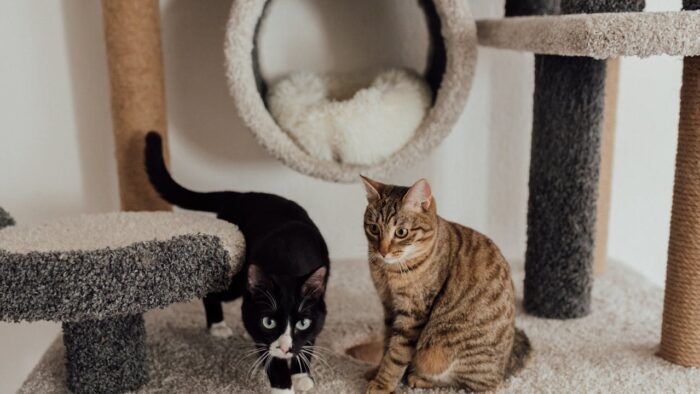
A cat tree doubles as a scratching surface and a place to climb and perch, which is why it features in our guide to cat trees for small spaces.
Make the right surface irresistible
- Place the new post right next to the furniture the cat targets, then move it away by inches over weeks once the cat uses it.
- Rub or sprinkle catnip on the post, or dangle a toy against it, to draw the cat in.
- Reward the cat with praise or a treat whenever it uses the post, so the habit pays off.
- Gently place the cat’s paws on the post after a nap, when cats often want to scratch, to demonstrate the idea.
Make the furniture less appealing
While you build the new habit, protect the old target. Double-sided sticky tape, a tightly fitted cover, or a sheet of plastic over the spot makes the surface unsatisfying to scratch. The goal is not to trap or startle the cat but to quietly remove the reward, so the post becomes the obvious better option. Remove the deterrents gradually once the cat has switched.
Keep claws in check
Regular, careful claw trimming reduces damage and is worth learning from your vet or a groomer. Plastic claw caps are another humane option some owners use. Declawing, by contrast, is the surgical amputation of part of each toe; it is banned or strongly opposed in many places and carries real welfare concerns, so it is not a scratching solution this guide recommends. For anything involving your cat’s health or a procedure, consult your vet.
Persistence, not punishment
Stopping furniture scratching is a matter of redirecting a healthy instinct rather than suppressing it. Offer posts that beat the sofa on height, sturdiness, texture, and location, reward their use, and make the furniture temporarily dull, and most cats switch within weeks. Sudden, frantic scratching can occasionally signal stress, so if it appears alongside other changes, the calming ideas in our guide to reducing pet anxiety naturally may help. Work with the instinct, not against it, and your furniture and your cat can both come out intact.
Frequently asked questions
Why does my cat ignore the scratching post?
Usually because it does not meet the cat’s preferences. The post may be too short, too wobbly, the wrong texture, or in the wrong place. Try a taller, sturdier post in sisal or cardboard, position it where the cat already scratches, and make it rewarding to use.
Will catnip make my cat use the post?
It often helps draw a cat to a new post, though not every cat responds to catnip. Combining it with placement near the cat’s favourite scratching spot and rewards for using the post is more reliable than catnip alone.
Is it ever okay to declaw a cat?
Declawing is the amputation of part of each toe and is banned or discouraged in many regions because of pain and long-term welfare concerns. Most experts recommend claw trimming, suitable posts, and humane claw caps instead. Discuss any concerns about your cat’s claws with your vet.
My cat suddenly started scratching everything, why?
A sudden change can reflect stress, a new pet or person, or a change in the home. Make sure good scratching surfaces are available and look at what changed. If the behaviour comes with hiding, appetite changes, or other signs, it is worth a vet visit to rule out underlying causes.