The first sign that a dog is getting older is rarely dramatic. It is the slightly slower rise from the floor, the pause at the bottom of the stairs, the longer sleeps. None of it means the dog is unwell, but it does mean the home and routine that suited a young dog need adjusting. Get those adjustments right and an older dog can stay comfortable, mobile, and engaged for years.
Aging is not a single switch. Larger breeds are often considered senior around six or seven, smaller ones later. Rather than fixing on a number, watch for the gradual changes below and respond to them as they appear.
Making the home easier to move around
Stiff joints turn everyday surfaces into obstacles. A few changes remove most of the strain:
- Lay rugs or runners over slippery floors so an older dog is not skating on tile or laminate.
- Add a low ramp or step to favourite furniture or the car to spare the jump.
- Raise food and water bowls slightly for a dog that finds bending uncomfortable.
- Keep everything the dog needs on one level if stairs have become a struggle.
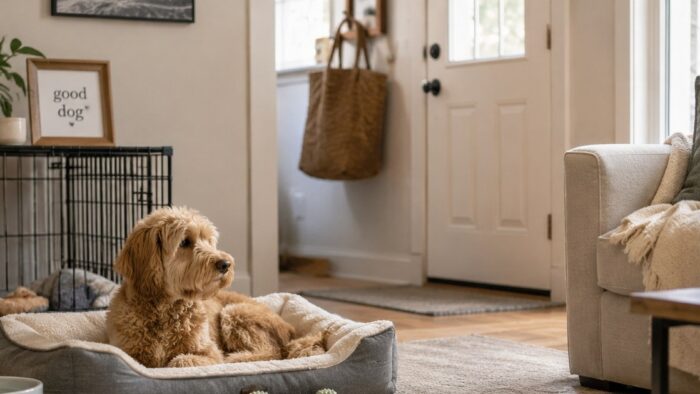
A warm, well-padded bed away from draughts matters more than ever, since older joints feel the cold and pressure. An orthopaedic or memory-foam mat is a kind investment for a bony, aging dog.
Exercise: gentler, not less
Older dogs still need movement to keep joints supple and weight in check, but the shape of it changes. Swap long, demanding outings for shorter, more frequent walks at the dog’s pace. Gentle play indoors keeps the mind and body ticking over without the impact of hard running. Keeping an older dog lean is one of the kindest things you can do for its joints, which is why the principles in our guide to keeping indoor pets at a healthy weight matter even more with age.
Keeping the mind busy
Mental stimulation slows the dullness that can come with age and gives a less mobile dog something rewarding to do. Food puzzles, gentle scent games, and short training sessions all help. The activities in our piece on puzzle feeders work well for older dogs because they are low-impact but absorbing.
Changes worth watching for
Some changes are a normal part of aging; others are early signs of treatable conditions. It helps to know roughly which is which, while leaving any diagnosis to a vet.
- Reluctance to jump or climb, or stiffness after rest, which may point to joint discomfort.
- Cloudy eyes, bumping into things, or hesitation in dim light, which can signal changing vision.
- Drinking or urinating noticeably more, or weight shifting without a change in food.
- Confusion, restlessness at night, or getting “stuck” in corners, which can be signs of cognitive change.
- New lumps, bad breath, or a dull coat.
None of these should be self-diagnosed. They are simply prompts to book a check-up, and recognising them early is part of the broader skill covered in our guide to subtle signs your pet might be unwell.
The role of regular vet care
Older dogs benefit from more frequent check-ups, often twice a year, because problems caught early are usually easier to manage. Your vet can advise on joint support, diet changes, dental care, and pain relief tailored to your individual dog. This article is general guidance only and is not a substitute for professional veterinary advice.
A kinder pace of life
Caring for a senior dog is mostly about noticing and adjusting: a softer bed, a gentler walk, a non-slip path to the water bowl, a quicker trip to the vet when something changes. The reward is a dog that stays comfortable and connected to family life well into old age. Slow down with your dog rather than pushing it to keep up, and these years can be among the most contented you share.
Frequently asked questions
When is a dog considered senior?
It depends on size and breed. Many large dogs are seniors by six or seven, while small breeds may not show age until ten or beyond. Rather than fixing on a number, watch for gradual changes in energy, movement, and sleep, and adjust care as they appear.
How much exercise does an older dog need?
Most older dogs still need daily movement, but gentler and often split into shorter sessions. Let the dog set the pace, watch for stiffness afterwards, and keep it lean. A vet can advise on suitable activity if your dog has joint or heart concerns.
Is it normal for an old dog to sleep all day?
Older dogs do sleep more, but a sudden jump in sleeping, or trouble settling at night, is worth mentioning to a vet. It can reflect normal aging or point to pain, cognitive change, or other conditions that benefit from attention.
Should I change my senior dog’s food?
Many older dogs do well on a diet adjusted for their activity, weight, and any health conditions, but the right choice varies by individual. Ask your vet before switching, especially if your dog has kidney, heart, or joint issues that diet can affect.
This article offers general information for pet owners and is not a substitute for professional veterinary advice. If you are concerned about your pet’s health, consult a qualified veterinarian.