Rabbits are among the most misunderstood pets there are. Sold as easy, low-maintenance animals for a hutch at the bottom of the garden, they are in reality intelligent, social, sensitive companions that thrive as indoor house pets, and suffer badly when kept as the myth suggests. A house rabbit, given space, company, and the right care, can be as engaging and affectionate as a cat or dog. This guide covers what a rabbit actually needs to live well indoors, the diet that keeps it healthy, and the common care mistakes that cause so many rabbits to live diminished lives.
The honest principle is that a rabbit is a social, active animal that needs space to move, a companion, a hay-based diet, and a rabbit-proofed home, nothing like the solitary hutch existence so many endure. Meet those needs and a house rabbit is a delight.
Space and housing
The single biggest welfare issue for rabbits is confinement. A rabbit needs far more room than a typical hutch or cage, with space to hop, run, stretch up, and play for much of the day.
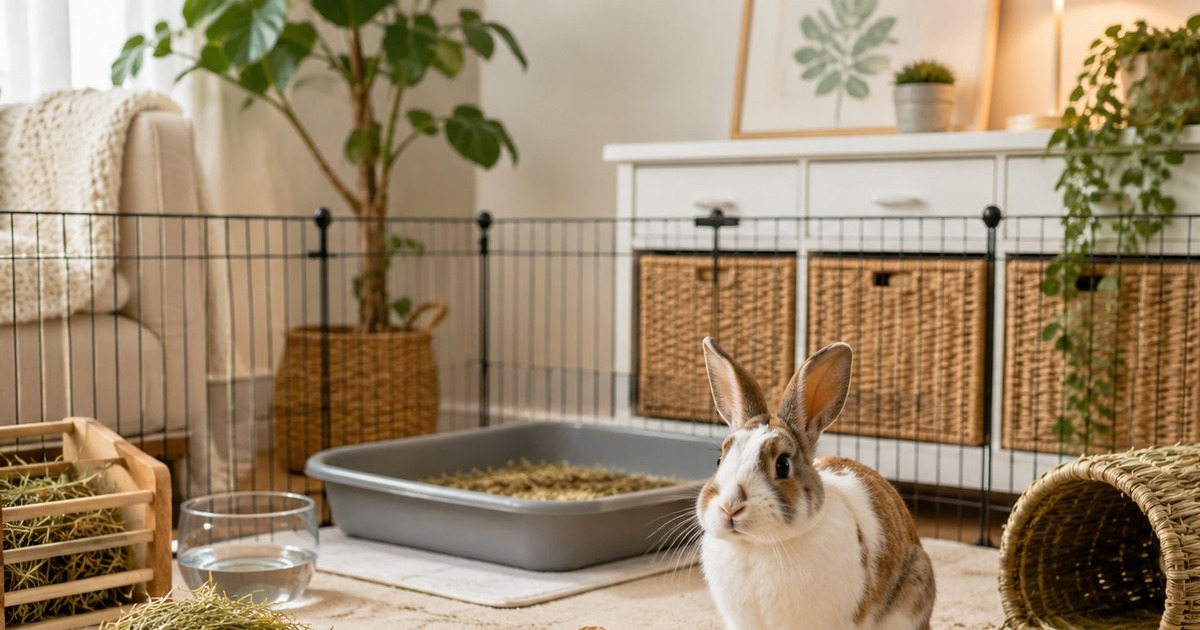
- Provide a large enclosure or pen as a base, plus several hours of free-roaming time daily.
- Many owners let house rabbits roam freely in rabbit-proofed rooms, which suits them well.
- Give a hideaway where the rabbit can retreat and feel secure.
- Litter-train the rabbit, which is very achievable and makes indoor living clean and easy.
Diet: hay above all
Diet is where many rabbits are failed. A rabbit’s diet should be based overwhelmingly on good-quality hay, which it needs constantly, because it is essential both for wearing down continuously growing teeth and for healthy digestion. Fresh leafy greens supplement the hay, with only a small amount of pellets and treats. A diet too low in hay leads to serious dental and digestive problems, so unlimited hay is non-negotiable. As with all small pets, the general signs a pet may be unwell apply, and rabbits hide illness well.
Company and handling
Rabbits are highly social and are usually happiest with a compatible rabbit companion, since loneliness genuinely distresses them. Bonding two rabbits takes patience but pays off in a far richer life for both. With handling, remember rabbits are prey animals: they often dislike being picked up and feel safest with all four feet on the ground, so build trust gently at their level rather than scooping them up. Forced handling erodes trust, while patience earns a confident, affectionate rabbit.
Rabbit-proofing the home
A free-roaming rabbit will chew, it is instinct, so the home must be proofed for the rabbit’s safety and your belongings. This overlaps closely with general pet-proofing your home, with a few rabbit-specific priorities.
- Protect or hide electrical cables, which rabbits love to chew and which are dangerous.
- Move toxic houseplants out of reach and check which plants are safe.
- Block access to gaps and spaces where a rabbit could get stuck or escape.
- Provide plenty of safe chew items so the rabbit chews those rather than your furniture.
Health and veterinary care
Rabbits need a vet experienced with them, since not all clinics treat rabbits well, and they require their own preventive care. Because they are prey animals that hide illness, a rabbit that stops eating or producing droppings is a genuine emergency needing same-day veterinary attention, as gut problems can become life-threatening very quickly. Knowing your rabbit’s normal and acting fast on any change is essential, far more so than with a hardier pet.
Common mistakes
- Keeping a rabbit confined to a small hutch or cage, the leading welfare failure.
- Feeding too little hay and too many pellets or treats, causing dental and gut disease.
- Housing a social rabbit permanently alone.
- Picking the rabbit up against its will, eroding trust.
- Using a vet inexperienced with rabbits, or delaying care when the rabbit stops eating.
Editor’s note
Almost everything the old image of rabbit-keeping taught us is wrong. A rabbit shut alone in a small hutch, fed mostly pellets, and rarely handled is a lonely, under-stimulated animal living far below its potential. Bring the rabbit indoors, give it space to roam and a companion to live with, base its diet on unlimited hay, and proof your home against its chewing, and you discover what rabbits really are: curious, characterful, affectionate companions. They are more work than the myth promised, but kept properly, a house rabbit is every bit as rewarding as any other pet.
Frequently asked questions
Can rabbits really live indoors as house pets?
Yes, and most thrive on it. House rabbits can be litter-trained and given free run of rabbit-proofed rooms, living as engaging, affectionate companions much like a cat. Indoors they are safe from predators and weather, and they benefit from the company and stimulation of being part of the household rather than isolated outside.
What should a rabbit eat?
Mostly good-quality hay, which should be available at all times, since it is essential for their teeth and digestion. Supplement with fresh leafy greens and only a small amount of pellets, keeping treats minimal. A diet too low in hay and too high in pellets or treats causes serious dental and digestive problems, so unlimited hay is the cornerstone.
Do rabbits need a companion?
Usually yes. Rabbits are highly social and are generally happiest living with a compatible rabbit companion, as they can become lonely and depressed alone. Bonding a pair takes patience and should be done carefully, but a bonded pair enjoys a much fuller, happier life than a solitary rabbit.
Why is a rabbit not eating an emergency?
Because a rabbit’s digestive system must keep moving constantly, and a rabbit that stops eating or producing droppings can deteriorate dangerously within hours as its gut slows or shuts down. This is a genuine same-day emergency requiring a vet experienced with rabbits. Since rabbits hide illness as prey animals, any sudden loss of appetite should be treated as urgent rather than watched.
Are rabbits good pets for children?
They can be part of a family, but with realistic expectations and adult responsibility for their care, not as easy children’s pets. Rabbits are prey animals that often dislike being picked up and need careful, gentle handling, space, a companion, and a precise diet. An adult should oversee their welfare, with children involved under supervision, rather than leaving a rabbit’s demanding care to a child alone. A rabbit can teach a child a great deal about gentle, responsible care, but only with an adult genuinely sharing the work and watching over the animal’s welfare. Shared properly, it becomes a rewarding family responsibility rather than a burden on either the child or the rabbit.