Indoor cats live roughly three times longer than cats that live mostly outdoors: about 10 to 15 years indoors against 2 to 5 years for free-roaming cats, according to the UC Davis School of Veterinary Medicine. Keeping a cat indoors is not cruel if you replace what the outdoors provides, which is hunting, climbing and novelty. Keeping a cat indoors in a bare flat with nothing to do is where the welfare problem actually sits.
Few cat topics generate more disagreement, and much of the argument happens because people in different countries are describing different realities. Both arrangements have real costs and real benefits, and the right choice depends on where you live and what you can provide. The numbers below are the part of the debate that is not a matter of opinion.
How much longer do indoor cats live?
The gap is large and consistent across studies, even though the exact figures move around depending on which cats were counted and where.
| Living arrangement | Typical lifespan | Source |
|---|---|---|
| Indoor only | 10 to 15 years (many reach 17 to 20) | UC Davis School of Veterinary Medicine |
| Mostly or fully outdoor | 2 to 5 years | UC Davis School of Veterinary Medicine |
| All pet cats, UK (indoor and outdoor mixed) | 11.7 years average; females 12.5, males 11.2 | VetCompass, Journal of Feline Medicine and Surgery, 2024 |
| Neutered vs intact | Neutered cats lived about 1.07 years longer | VetCompass, 2024 |
Two details matter when you read that table. First, the UK average of 11.7 years includes cats that died young in road accidents, so it understates what a cared-for indoor cat can expect. Second, the UC Davis researchers found no meaningful difference between indoor-only cats and cats allowed supervised or limited outdoor time; the shortened lifespan belongs to cats that live primarily outside. So the choice is not purely binary.
The reasons for the gap are not mysterious: outdoor cats face road traffic, fights and the infections they transmit, poisoning, dogs, predators, theft and getting shut in sheds. In the UK, road traffic accounts for close to a quarter of deaths in outdoor cats under five, according to the British Veterinary Association.
Indoor cats face a different risk profile: obesity, diabetes, urinary problems linked to inactivity and stress, boredom-driven behaviour, and household hazards such as toxic plants, open windows and tumble dryers.
Behaviour and mental wellbeing
Cats are hunters with a strong drive to stalk, chase and pounce. Outdoors, that drive is satisfied continuously without any effort from you. Indoors, it has to be met deliberately through play, puzzle feeding and climbing, or it emerges as redirected behaviour – ambushing ankles, overgrooming, night activity, or conflict with other cats in the house.
This is the central honest point: an indoor cat in an enriched home does very well. An indoor cat in a bare flat with a bowl and a sofa frequently does not. Indoor living is safer only if you supply what the outdoors would have supplied.
Wildlife
Free-roaming cats kill significant numbers of birds, small mammals and reptiles. The scale is debated and varies by region, but the effect is real and is why several countries and councils now restrict or ban free-roaming cats, particularly near sensitive habitats. In Australia and New Zealand this is a mainstream legal position rather than a fringe one.
Is it cruel to keep a cat indoors?
No, provided the cat has an outlet for the behaviours it would otherwise perform outside. Veterinary bodies including the American Veterinary Medical Association and the American Association of Feline Practitioners recommend indoor living for safety, and the lifespan figures above are the reason. What is unkind is an indoor life without stimulation: no climbing, no hunting-style play, no new smells, the same four walls year after year. That cat is safe and bored, and boredom shows up as overgrooming, night yowling, scratching and aggression.
The practical test is simple. If your cat gets two or three short play sessions a day that end in a “catch”, has somewhere high to sit, has a scratching surface it actually uses and eats at least part of its food from a puzzle feeder, it is getting most of what the outdoors would have given it without the traffic. Our guide to keeping an indoor cat happy and stimulated walks through each of those in order, and the free enrichment ideas cover the zero-budget version.
How long can an indoor cat survive outside?
An indoor cat that slips out is usually found within a few days, and most are within a few hundred metres of home. Indoor cats that escape tend to hide rather than roam, because the outdoors is frightening to a cat that has never been in it. Cats can go several days without food, but water is the limit, and in hot or freezing weather the window shrinks to a day or two. The useful numbers are these: check the immediate area within the first 24 hours, put the litter tray and something that smells of you outside the door, and search at dusk and dawn with a torch when a hiding cat is most likely to move. If your cat is microchipped, confirm the registered phone number is current today, not after an escape.
Regional norms differ for good reasons
In much of the UK and Western Europe, letting cats out is normal, roads are often quieter in residential areas, and welfare organisations historically supported outdoor access. In North America and Australasia, indoor-only is the mainstream veterinary recommendation, driven by traffic, predators and native wildlife. Neither culture is simply wrong; the risk profile genuinely differs.
The middle ground
Most of the benefit of outdoor access, with little of the risk:
- Catio. An enclosed outdoor run attached to a window or door. The single best compromise – fresh air, sun, smells and bird watching with no road or predator risk.
- Cat-proof fencing. Roller bars or inward-facing brackets that keep a cat in the garden. Effective for most cats.
- Harness walking. Works for some cats, particularly if started young. Not every cat will accept it.
- Supervised garden time at quiet hours, avoiding dawn and dusk when hunting and traffic risks peak.
- Window perches and secure balcony netting for flats.
If your cat lives indoors
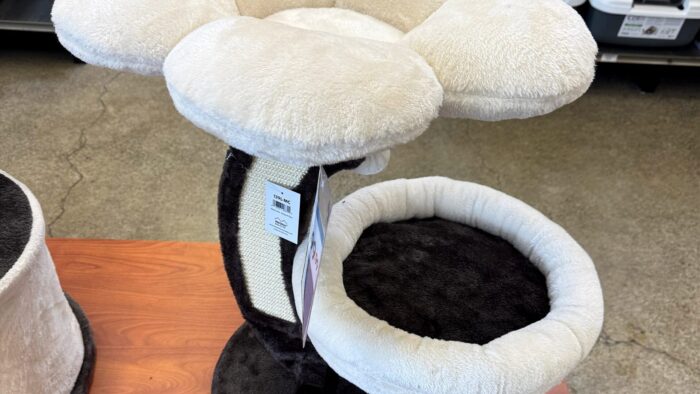
Provide vertical space – shelves, trees, the top of a wardrobe. A tall cat tree that fits a small flat solves the vertical-space problem in one purchase. Two or three short play sessions a day with a wand toy, each ending in a catch and a small meal, to complete the hunting sequence. Puzzle feeders instead of a bowl. A window view with a perch. Scratching posts in the rooms the cat actually uses. One litter tray per cat plus one, in quiet places. Rotate toys rather than leaving them all out.
If your cat goes outside
Microchip and keep the registration current. If you are moving a roaming cat to indoor life, the outdoor-to-indoor transition guide covers the first few weeks. Use a quick-release collar if you use one at all. Keep vaccinations and parasite treatment up to date. Neuter – it reduces roaming, fighting and unwanted litters dramatically. Keep the cat in at night, when road and fight risks are highest. Fit a bell or a brightly patterned collar cover to reduce hunting success.
Frequently asked questions
Are indoor cats happy?
Yes, when their environment gives them things to do. Happiness in a cat looks like relaxed body language, normal appetite, play on its own initiative and a glossy, unchewed coat. A cat that sleeps all day and ignores toys is not necessarily content; it may have given up asking.
Do indoor cats get depressed?
Cats do not have depression in the human sense, but chronic boredom and stress produce overgrooming, hiding, loss of appetite and litter tray avoidance. These are the signs vets look for, and reading your cat’s body language helps you catch them early.
Is an indoor-outdoor compromise safer than full outdoor access?
Supervised time, a harness, or an enclosed garden space (“catio”) gives most of the stimulation with almost none of the road risk. The UC Davis data found limited outdoor access did not shorten lifespan the way primarily-outdoor living did.
Does neutering change the picture?
Yes. Neutered cats roam less, fight less and lived about a year longer in the 2024 VetCompass study. For an outdoor cat it is the single biggest safety step after keeping it in at night.
Sources
- UC Davis School of Veterinary Medicine, “Cats: Indoors or Outdoors?” (healthtopics.vetmed.ucdavis.edu)
- VetCompass, Journal of Feline Medicine and Surgery, 2024: life expectancy of companion cats in the UK
- British Veterinary Association, 2024 analysis of causes of death in outdoor cats
The reasonable conclusion
An enriched indoor life, ideally with safe outdoor access through a catio or secure garden, gives most cats the best combination of safety and stimulation. A bare indoor life is a real welfare problem, and unrestricted outdoor access is a real safety and wildlife problem. The work is in the enrichment, not in the argument.
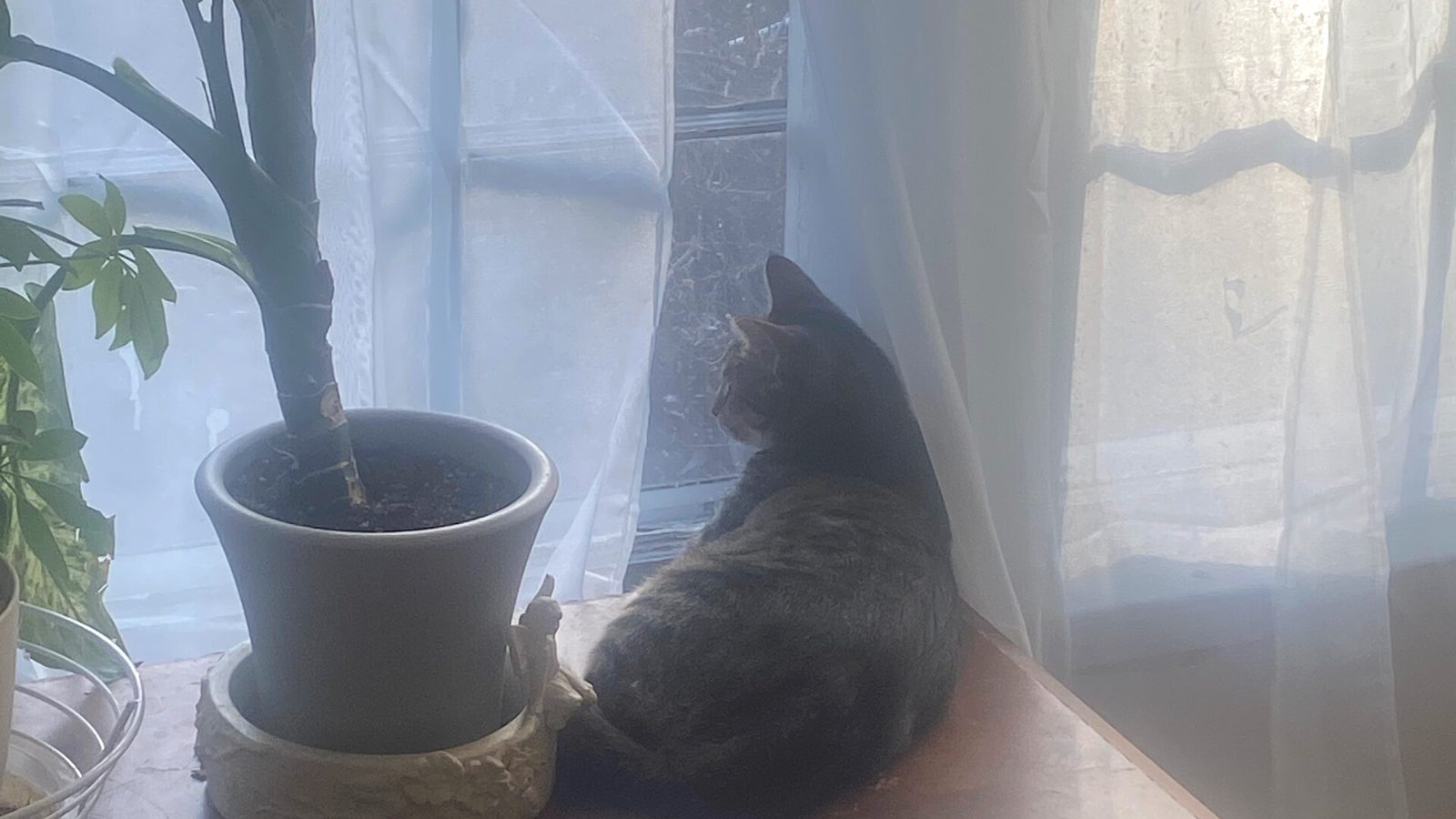
Featured image: Cat looking out the window curiously. Photo: Astraeides (CC BY-SA 4.0), via Wikimedia Commons.