Enrichment is about giving a cat opportunities to use its natural behaviours: hunting, climbing, hiding, investigating and scratching. None of that requires buying anything. Enrichment is what makes the indoor life the safer choice without being the duller one.
Boxes, bags and paper
A cardboard box is genuinely good enrichment, not a joke. Cats use enclosed spaces to feel secure, and a box in a quiet corner lowers stress measurably. Cut two or three entrance holes to make it a tunnel. Stack boxes to create levels. Replace them when they get flattened – novelty is part of the appeal.
Paper bags with the handles cut off are equally good. Never leave plastic bags out; cats chew them and the handles are a strangulation risk.
A sheet of wrapping paper or newspaper laid flat on the floor gives a crinkle surface to pounce on and hide under.
Food as enrichment
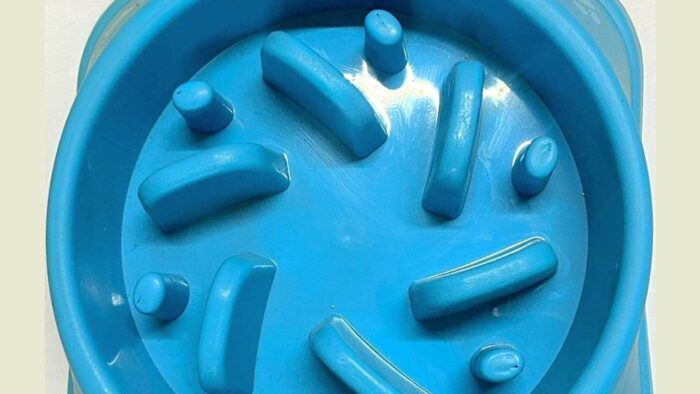
Eating from a bowl takes a cat about ninety seconds. Making food take effort is the single highest-value free change you can make.
- Scatter feeding: throw dry food across the floor or a rug so the cat hunts for each piece
- Egg box puzzle: drop kibble into the cups of an empty egg carton
- Toilet roll tube: fold one end, add food, fold the other, cut a few holes
- Plastic bottle roller: a clean bottle with holes cut in the side, lid removed, label off
- Muffin tin and balls: food in the cups, something light covering each one
- Hide portions around the house at different heights so the cat patrols and finds them
Hunting play with what you have
A shoelace tied to a stick, a strip of fabric, a feather found on a walk, a ball of foil, a wine cork. What matters is not the object but how you move it.
Move the toy like prey: away from the cat, not towards it. Short dashes, sudden stops, disappearing behind a chair leg, a twitch and a pause. Let the cat stalk. Let it catch the toy several times – a hunt that never succeeds is frustrating. Finish with a catch, then a small meal. That completes the sequence and is what makes a cat settle afterwards.
Two short sessions of ten minutes beat one long one, and the best times are dawn and dusk when cats are naturally active.
Scent enrichment
Cats experience the world largely through smell, and scent is free.
- Bring in a handful of leaves, a twig or a pine cone from outside
- Let the cat investigate shopping bags and anything new that comes into the house
- Grow cat grass from seed on a windowsill
- Rub a little dried catnip or silver vine into a cardboard scratcher – note that only around two thirds of cats respond to catnip, and silver vine works for many that do not
- Swap a blanket between rooms occasionally so the scent map changes
Vertical space and views
Clear the top of a bookshelf or wardrobe and make it reachable with a chair or two. Cats value height for security and surveillance more than they value floor space. Move a chair to a window so there is a view. A bird feeder outside that window is the closest thing to cat television.
Rotate everything
Novelty is most of what makes something interesting. Keep two thirds of the toys and boxes put away and swap them weekly. A toy returned after a fortnight is new again.
Social enrichment
Time with you counts. Grooming sessions, talking to the cat, sitting quietly in the same room. For cats that enjoy it, a few minutes of brushing is both social contact and sensory stimulation.
A free daily routine
Morning: scatter feed breakfast, ten minutes of wand play. Daytime: a puzzle feeder with a portion of the day ration, boxes available, window perch open. Evening: ten to fifteen minutes of play ending in a catch and the last meal. Weekly: rotate boxes and toys, bring in something new to smell.
That routine costs nothing and prevents most of the behaviour problems that indoor cats develop.
A Rotation Beats a Pile
The mistake with enrichment is deploying everything at once, after which the cardboard castle becomes furniture the cat ignores. Novelty is the active ingredient, so run a rotation: three toys or setups out at a time, everything else in a cupboard, swap every few days. The same box reappearing after a week is new again, scented differently and in a new spot. Rotate locations too: a paper bag in the hallway is a different event from the same bag behind the sofa. Five minutes of this management keeps a free setup more interesting than a basket of expensive toys, and pairs naturally with the hunting-style play in our play behaviour guide.
The best free enrichment most people skip
Your own routine. Cats are observation animals: a bird feeder visible from a window perch, a tap left dripping for one minute, the washing machine cycle, all count as programming. Food puzzles cost nothing either: scatter-feed half the daily kibble across the floor or hide it in a cut egg carton, and mealtime becomes a twenty-minute hunt instead of a thirty-second gulp, which also helps the waistline per healthy weight for indoor pets.
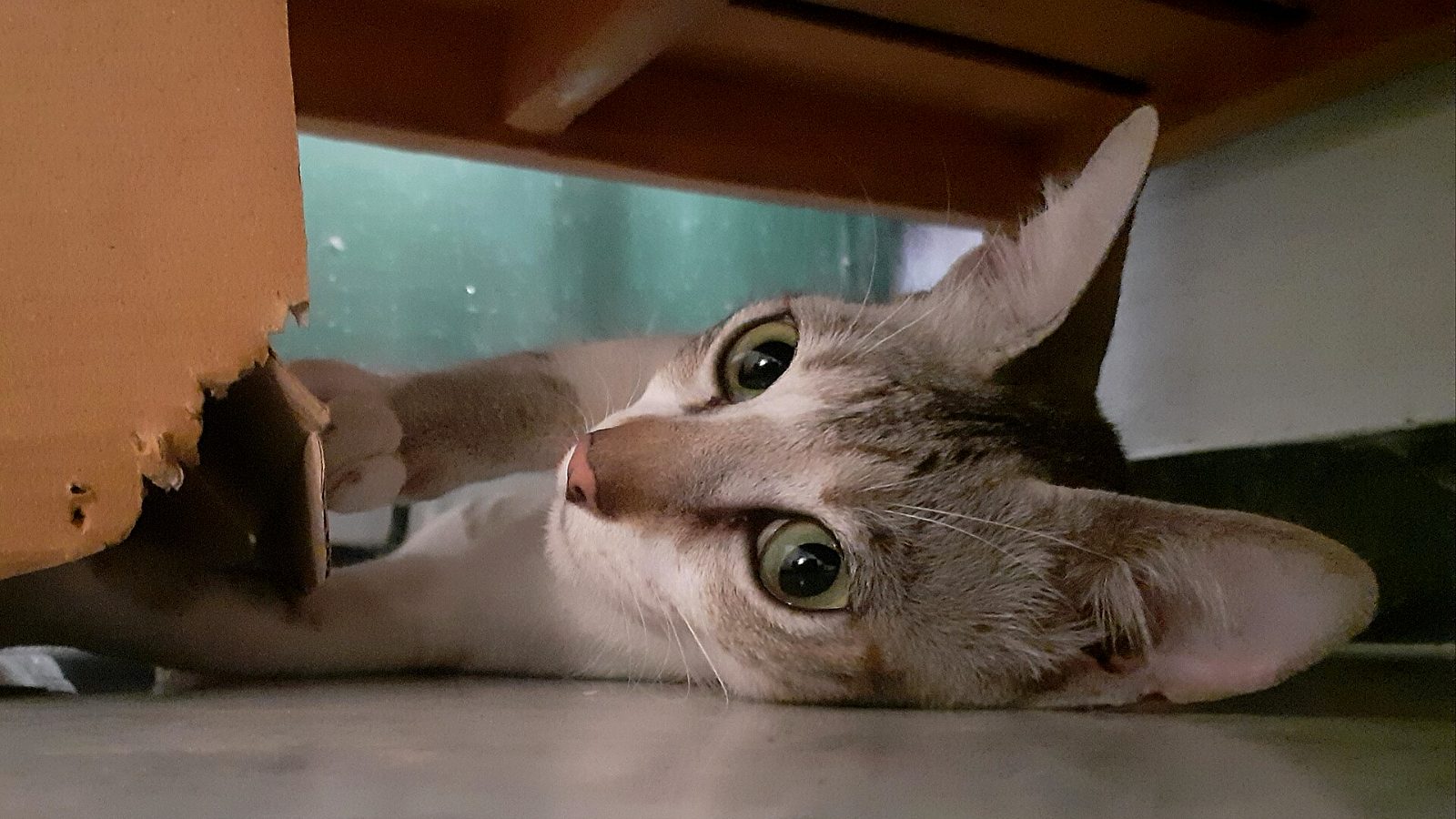
Featured image: Playing time of our cat. Photo: Sindugab (CC0), via Wikimedia Commons.