Cats communicate constantly and most of it is missed, because people look for dog-style signals. Read the tail, ears, eyes and body together and a cat becomes remarkably easy to understand.
The tail
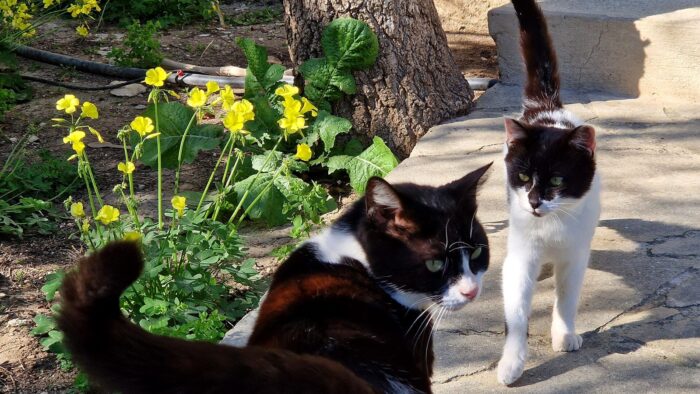
Upright with a slight hook at the tip: the classic friendly greeting. A cat approaching you with its tail up is pleased to see you.
Upright and quivering: excitement and greeting, often when you come home. In an unneutered cat near a vertical surface it can precede spraying.
Horizontal or low and relaxed: neutral, going about its business.
Tucked under the body: fearful or in pain.
Puffed up like a bottle brush: frightened and trying to look bigger. Often with an arched back.
Thrashing or thumping: agitation. A dog wagging means one thing; a cat thrashing means stop.
Tip twitching only: mild interest or concentration, as when watching a bird. Not necessarily negative.
Wrapped around another cat or your leg: affiliative, the feline equivalent of an arm round a shoulder.
The ears
Forward and upright: alert, interested, relaxed.
Swivelling independently: tracking sound, assessing. Normal.
Rotated sideways, the so-called aeroplane ears: irritated or conflicted. A clear warning to back off.
Flattened against the head: fear or imminent defensive aggression. Stop whatever you are doing.
The eyes
Slow blink: a genuine affiliative signal, well supported by research. Blink slowly back – it works.
Relaxed half-closed eyes: comfortable and content.
Wide eyes with large round pupils: arousal. Could be fear, could be play excitement – read the rest of the body.
Narrow vertical slits in normal light: often focused or mildly tense, or simply bright light. Context matters.
Hard unblinking stare: a threat between cats. Avoid staring at a cat you do not know.
Whiskers
Forward and fanned means interested or hunting. Neutral and sideways means relaxed. Pulled back flat against the cheeks means fear or pain.
Posture
Loose and sprawled, belly exposed: relaxed and feeling safe. Not an invitation to rub the belly – many cats will grab your hand, and that is a normal defensive reflex rather than a betrayal.
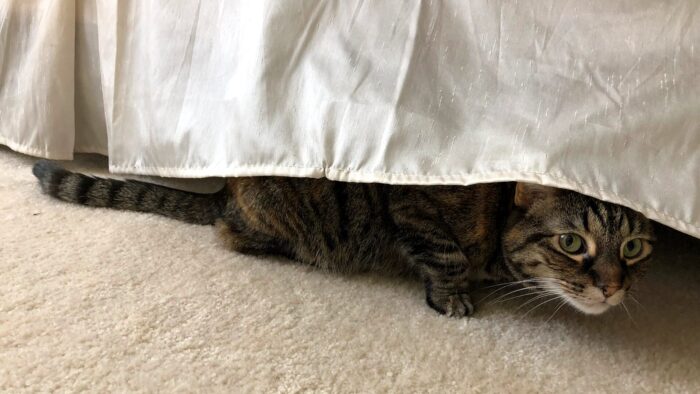
Crouched with paws tucked: can be comfortable, but a tense crouch with tucked tail and flattened ears is a cat in pain or fear.
Arched back, sideways on, fur up: the classic defensive threat display.
Low crouch, weight back, staring: about to pounce, in play or in earnest.
Reading the whole cat
Single signals mislead. Dilated pupils with forward ears and a hunting crouch is play. Dilated pupils with flat ears and a tucked tail is fear. The combination is the message.
Three patterns worth recognising
Petting-induced overstimulation: the cat has been enjoying it, then the tail starts twitching, the skin ripples, the ears rotate, and the head turns towards your hand. Stop at the twitch and most bites never happen.
Play versus real aggression: play is silent, bouncy, takes turns, and claws are usually sheathed. Real conflict involves growling, hissing, flattened ears and one cat trying to leave.
Pain: cats hide it well. Look for a hunched posture, reluctance to jump, hiding more than usual, reduced grooming or overgrooming one area, a tense face with whiskers pulled back, and irritability in a normally tolerant cat. Any of these warrant a vet visit.
Practise
Spend a week noting your cat tail, ears and eyes at a few points each day. Within a fortnight you will be predicting what it does next, which is most of what good handling consists of.
Reading Combinations, Not Single Signals
Single signals mislead; clusters tell the truth. A swishing tail alone might be concentration, but swishing tail plus flattened ears plus dilated pupils is a cat one step from swatting. Purring usually means contentment, yet purring with tense posture and a tucked body can be self-soothing pain, which is why the combination matters more than the headline signal. Build the habit of scanning four points in order: ears, eyes, whiskers, tail. Relaxed forward ears, soft blinking eyes, neutral whiskers, still or gently curved tail: green light. Anything mixed: pause the interaction and let the cat choose.
The signals most owners miss
The slow blink is the famous one, and returning it genuinely communicates. Less known: whisker position (pinned back signals fear, pushed far forward signals high arousal or hunting focus), the raised-rump response to petting (a compliment), and the belly display that is trust, not an invitation; most cats answer belly rubs with teeth. Skin rippling and sudden grooming mid-interaction signal overstimulation, the classic prelude to the “unprovoked” bite, a pattern that overlaps with the stress behaviours in reducing pet anxiety.
Related guides
- Your Adopted Cat First Night Home
- Why Does My Cat Bite Me? 6 Reasons and How to Stop It
- Best Indoor Cat Breeds for Apartment Living
Featured image: Love Cats (). Photo: Helgi Halldórsson from Reykjavík, Iceland (CC BY-SA 2.0), via Wikimedia Commons.