The litter box is the most important piece of equipment a cat owner buys, and the one most often chosen badly. Get it right and most litter problems never arise; get it wrong, too small, too enclosed, too gimmicky, and you invite the avoidance and mess that drive owners to despair. The market is full of fancy, expensive boxes that solve problems cats do not have while ignoring the few things cats actually care about. This guide cuts through it: what genuinely matters when choosing a litter box, which types suit which homes, and the costly features worth skipping.
The honest principle is that cats want a box that is big enough, clean, accessible, and unintimidating, and they care nothing for technology or looks. Choose for the cat’s preferences, not the marketing, and you avoid most trouble. A well-chosen box is one quiet piece of keeping an indoor cat happy and stress-free.
What actually matters
- Size: bigger than you think; a cat wants room to turn fully and dig. Most boxes are too small.
- Easy entry: low sides for kittens and senior or arthritic cats that cannot climb high.
- Easy to clean: a box you can scoop and wash easily gets cleaned more often, which cats demand.
- Open versus covered: many cats dislike hoods that trap odour and feel confining; offer the choice.
- Number: one box per cat plus one spare is the rule, regardless of how good each box is.
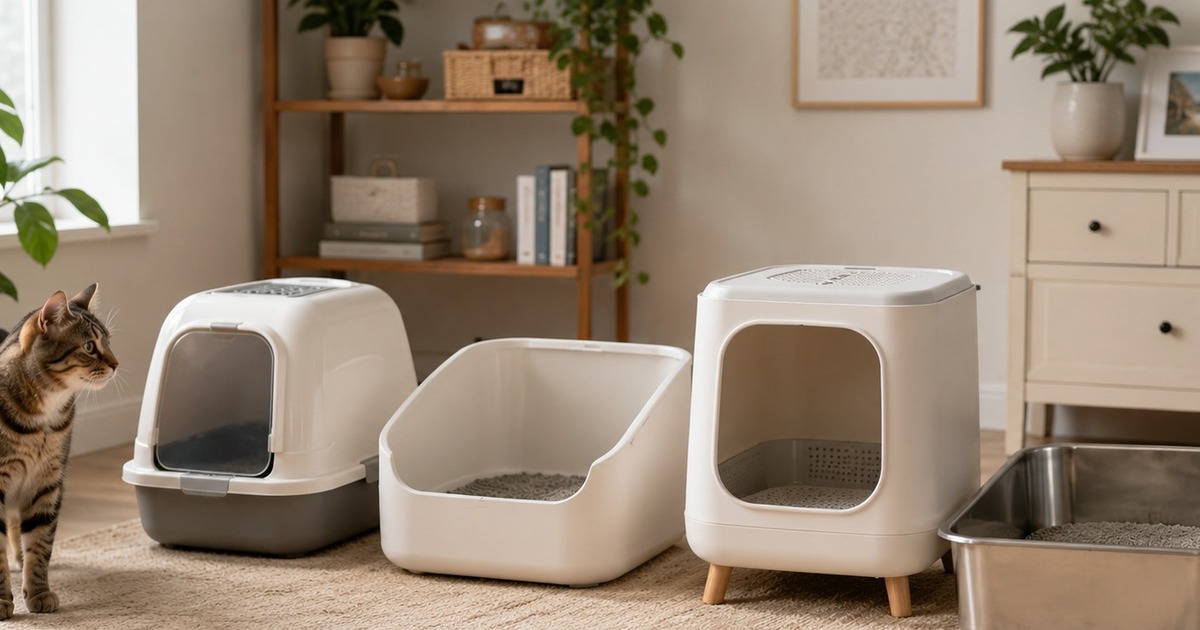
Types of litter box
Standard open trays
Simple, cheap, and preferred by many cats because they are open and airy. The main job is buying one large enough, since the standard sizes sold are often too small for an adult cat. The reliable default for most homes.
Covered boxes
Offer privacy and contain litter scatter, and some owners prefer them for odour and looks. But the hood traps smell, which the cat lives with, and some cats feel trapped inside. Fine if your cat accepts it; never force a hood on a reluctant cat.
High-sided and top-entry boxes
Good for cats that kick litter everywhere or stand tall to go. Top-entry designs cut scatter and tracking, but they do not suit kittens or older, less agile cats, so match the design to the individual.
Self-cleaning boxes
The premium, gadget-heavy category. They can help very busy owners, but they are expensive, can malfunction, and some cats are frightened by the mechanism. They are a convenience, not a cure, and never a substitute for the basics cats care about.
Setting it up to avoid problems
The best box still fails if it is poorly placed or maintained, so the setup is as important as the purchase. Get the placement and routine right and you prevent most of the issues covered in our guide to solving litter box problems.
- Place boxes in quiet, accessible spots with an escape route, away from food and water.
- In multi-cat homes, spread boxes across different locations so none can be guarded.
- Scoop at least daily and wash the box regularly; cats refuse a dirty box.
- Use a soft, fine, unscented litter, which most cats prefer, and change types gradually.
Features worth skipping
- Heavily perfumed or “odour-control” designs whose scent many cats dislike.
- Tiny “designer” boxes that look neat but are too small for the cat to use comfortably.
- Complex self-cleaning units bought before trying the simple, reliable basics.
- Enclosed furniture-style boxes that hide the box but trap odour and cramp the cat.
Common mistakes
- Buying a box that is too small, the single most common error.
- Forcing a covered or top-entry box on a cat that dislikes it.
- Choosing a high-sided or top-entry box for a kitten or senior cat.
- Relying on a self-cleaning gadget instead of frequent scooping.
- Having too few boxes for the number of cats.
Editor’s note
If I could give cat owners one piece of equipment advice, it would be this: buy a bigger, plainer litter box than you think you need, and buy enough of them. Almost every clever, expensive box on the market is solving a problem for you, odour, looks, scooping, while ignoring what the cat wants, which is simply a roomy, clean, accessible, open tray. Start with that, place it well, keep it clean, and you sidestep the litter problems that fill cat forums. Save the gadgets for after the basics are right, if you bother with them at all.
Once you have the box, the litter inside it matters too; see our guide to choosing the right cat litter.
Frequently asked questions
What size litter box is best?
Bigger than most boxes sold: a cat should be able to turn around fully and dig comfortably, with a rough guide being at least one and a half times the length of the cat. Too-small boxes are the most common cause of litter problems, so when in doubt, size up.
Are covered litter boxes bad for cats?
Not always, but many cats dislike them, because hoods trap odour and can feel confining, and some cats feel vulnerable inside. If your cat happily uses a covered box, it is fine; if there is any avoidance, try an open tray. Never force a hood on a reluctant cat.
Are self-cleaning litter boxes worth it?
They can help very busy owners, but they are expensive, can malfunction, and frighten some cats with their movement and noise. They are a convenience layered on top of the basics, not a replacement for an appropriately sized, clean, well-placed box, so get the fundamentals right before considering one.
How many litter boxes do I need?
The standard guideline is one box per cat plus one extra, placed in different, accessible locations. This holds no matter how good each individual box is, because it prevents guarding in multi-cat homes, offers a clean option if one box is soiled, and reduces the territorial stress that often causes avoidance.
Where is the best place to put a litter box?
In a quiet, easily accessible spot with an escape route, away from the cat’s food and water and from busy, noisy areas. Cats dislike feeling cornered or disturbed while toileting, so avoid cramped cupboards or high-traffic corridors. In multi-cat homes, spread boxes across different rooms so one cat cannot guard them all and block another’s access.
Do I need a special box for a kitten or senior cat?
You need one with low sides they can step into easily, since high-sided and top-entry boxes are hard for kittens and for older or arthritic cats to use. A simple open tray with a low entry, kept clean and accessible, suits these cats best, and you can move to a higher-sided design later for an adult cat that kicks litter about.