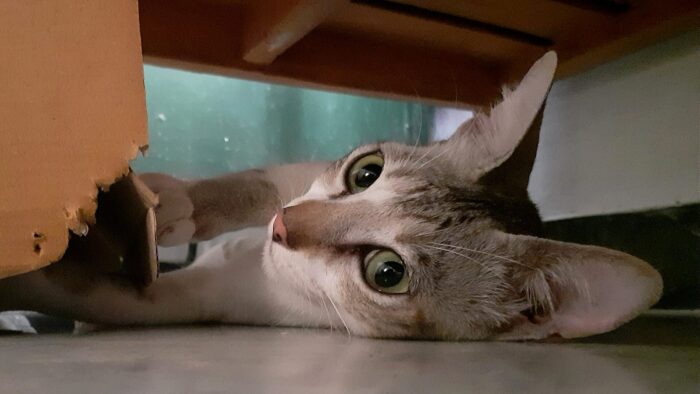
Play in cats is not a pastime. It is the hunting sequence performed without a meal at the end, and it serves the same function as hunting: physical exercise, mental engagement and the discharge of a powerful behavioural drive. A cat that cannot play properly is a cat with an unmet need, and the consequences show up as behaviour problems.
The hunting sequence
A wild cat hunt runs: locate, stalk, chase, pounce, catch, kill bite, eat, groom, sleep. Each stage releases the next. Play recreates the first six.
This matters for how you play. A toy that never gets caught leaves the sequence unfinished and the cat frustrated. A session that ends in a catch and then a small meal completes it, and the cat typically grooms and sleeps afterwards – exactly as it would after a real hunt.
Why indoor cats need it most
An outdoor cat may make dozens of hunting attempts a day. An indoor cat makes none unless you supply them. The energy and drive do not disappear; they get redirected into ankle ambushes, night zoomies at three in the morning, overgrooming, conflict with other cats in the house, or apathy and weight gain.
Most indoor-cat behaviour problems improve substantially with two good play sessions a day. It is the cheapest intervention available.
How much, and when
Aim for two or three sessions of ten to fifteen minutes daily. Cats are crepuscular, most active at dawn and dusk, so early morning and early evening are the natural slots. An evening session followed by the last meal is the most effective way to reduce night-time activity.
Short and frequent beats long and occasional. Cats hunt in bursts, not marathons.
How to play properly
Move the toy like prey. Prey runs away, hides and freezes. It does not fly at a cat face. Drag the toy away from the cat, let it disappear behind a chair leg, pause, twitch, then dash.
Use the pauses. The stalk is part of the hunt. Let the cat crouch, stare and wiggle before you move again. Constant motion skips the most engaging stage.
Let the cat win. Several catches during the session, and definitely one at the end.
Use a wand, not your hands. Hands as toys teaches a cat that hands are prey, which is a hard habit to undo and is the usual origin of the cat that attacks ankles.
Vary the prey type. Feather toys move like birds – airborne, erratic. Furry mice and strings move like rodents – low, along the floor, into gaps. Most cats have a preference; find your cat.
Finish with food. A few pieces of kibble or a small wet meal after the final catch closes the sequence.
Toy rotation
Cats habituate quickly. Keep most toys away and put out three or four at a time, swapping weekly. A toy returned after a fortnight is effectively new.
Solo play has limits
Puzzle feeders, treat balls, crinkle tunnels and track toys are genuinely useful for the hours you are out, and they add foraging effort. But they do not replace interactive play, because the unpredictability of a human-moved toy is what makes it engaging. Treat solo toys as the supplement and wand play as the main event.
Play changes with age
Kittens play constantly and roughly, and need an outlet or they practise on your hands. Adults play in shorter, more focused bursts. Senior cats still want to play but need lower, slower, gentler sessions – keep offering, because withdrawal of play interest can itself be a sign of pain or illness worth mentioning to a vet.
When play becomes a problem
Play aggression towards people almost always traces back to hands or feet being used as toys, and to too little appropriate play. The fix is the same in both cases: never use hands, increase structured wand play, and redirect an ambush onto a toy rather than reacting with noise and movement, which makes the game better from the cat point of view.
Running a Proper Hunt Sequence
A play session that ends mid-chase leaves a cat frustrated, which is where ankle attacks come from. The full predatory sequence is stare, stalk, chase, pounce, grab, kill-bite, and a satisfying session walks through all of it. Drive the wand toy like prey: along the ground, in short darts, hiding behind furniture, never dangled in the face, since nothing in nature attacks a cat’s face invitingly. Let the cat catch the toy regularly, allow a proper grab-and-kick at the end, then serve a few treats or a meal: hunt, catch, eat, groom, sleep is the natural cycle, and ending on “eat” is what closes the loop in the cat’s head.
How much play does an indoor cat need?
Two to three sequences of ten to fifteen minutes daily beats one marathon, because cats are sprint hunters that lose interest when exhausted. Dawn and evening match natural activity peaks, and a pre-bed session is the single best cure for the 4am zoomies. Boredom signs that persist despite play, covered in do indoor cats get bored, usually mean the sessions are dangling instead of hunting.
Related guides
- Cat Enrichment Ideas That Cost Nothing
- DIY Enrichment Ideas to Keep Indoor Cats Busy
- Your Adopted Cat First Night Home
Featured image: Gillie pouncing (). Photo: Dwight Sipler from Stow, MA, USA (CC BY 2.0), via Wikimedia Commons.