Cats cope with a move best when their routine and their smells change as little as possible. In the weeks before, leave the carrier out as a normal resting place and keep feeding times steady. On moving day, shut the cat in one quiet room with its litter tray, food, water and bed before the movers arrive, and move it last. In the new home, set up one room in the same way and let the cat explore the rest gradually over several days.
Timeline
| When | What to do |
|---|---|
| 2 to 4 weeks before | Leave the carrier out with bedding inside; check microchip and tag details; book a vet check if the journey is long |
| 1 week before | Pack gradually; keep the cat’s room and items untouched until last |
| Moving day, before loading | Cat in a closed room with tray, water, bed and a sign on the door |
| The journey | Secure, covered carrier; no loose cats in the car; never leave the cat in a parked car |
| Arrival | One prepared room with familiar unwashed bedding; let the cat come out of the carrier in its own time |
| First week | Open up one room at a time; keep meal times fixed |
| Outdoor cats | Keep indoors for at least two to three weeks before the first supervised outing; update the microchip address |
A cat that stops eating for more than a day after a move should be seen by a vet.
Moving is stressful for pets because territory is what makes an animal feel safe, and moving removes all of it at once. Most of the work is done in the weeks before and the weeks after, not on the day itself.
Two to four weeks before
Start bringing boxes into the house early and leave them out. Pets that watch the house change gradually cope far better than those who wake up to a packed hallway.
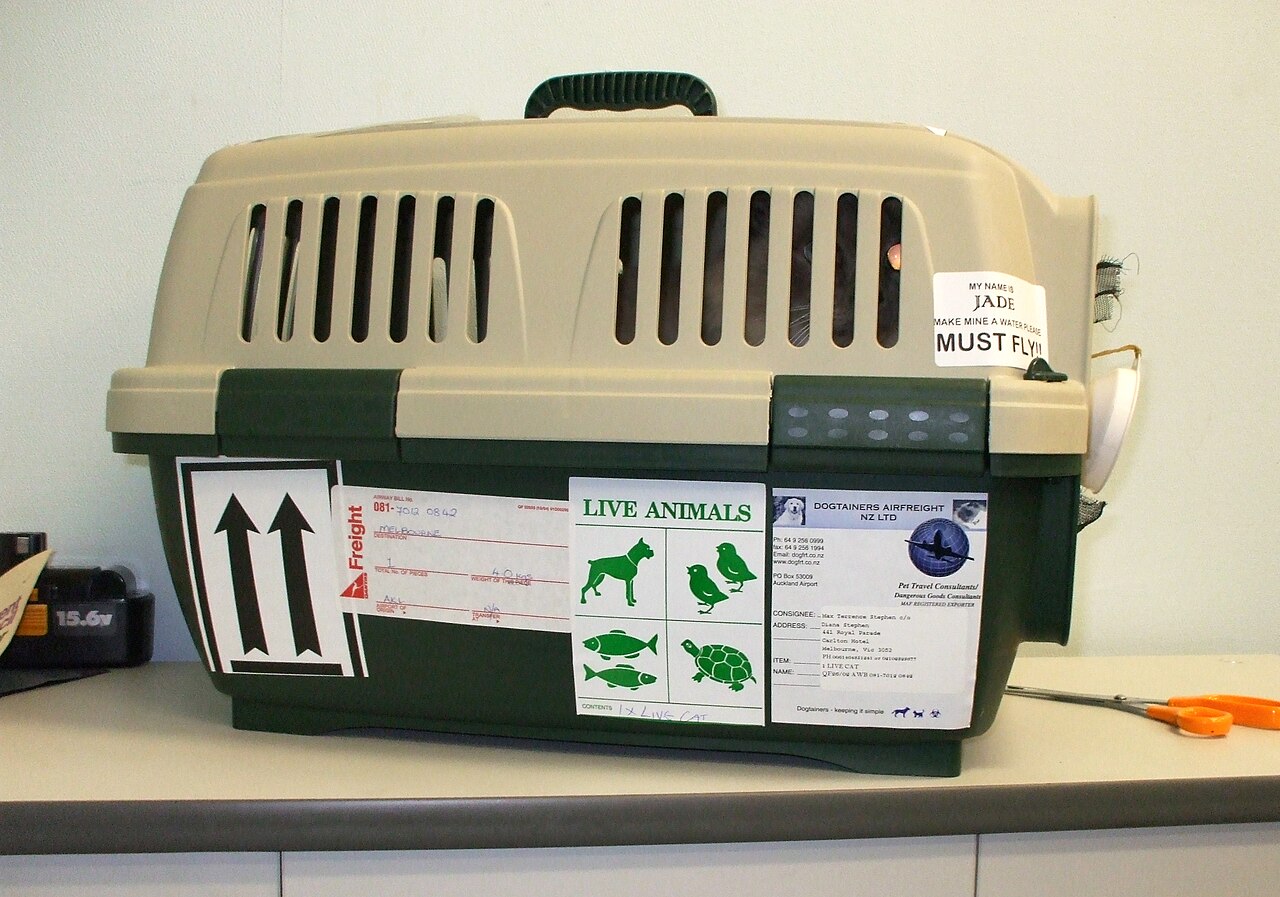
Get the carrier out now, not on moving day. Leave it open in a normal room with a blanket and treats inside, and feed meals in it. A carrier that only appears before vet visits is a source of dread; one that lives in the lounge is furniture.
Update microchip details with the new address – this is the single most useful thing you can do, and most people do it afterwards. Also update the collar tag.
Register with a vet near the new house and request your pet records be transferred.
One week before
Keep feeding, walking and play times unchanged. Routine is the anchor while everything else shifts.
Set aside a box of essentials that travels with you rather than in the van: food, bowls, medication, litter and tray, a familiar blanket, a favourite toy, poo bags or a scoop, and a lead or harness.
If your pet is very anxious, speak to your vet now. Pheromone diffusers help some animals, and in some cases a vet may recommend short-term medication – that is a decision for them.
Moving day
Shut the pet in one empty room before the removal team arrives, with a sign on the door. Include water, a litter tray for cats, a bed and a toy. Doors propped open and strangers carrying furniture is how pets escape.
Better still, arrange for the pet to spend the day with a friend, a family member or a boarding facility, and collect it once the new house is partly set up.
Feed lightly on the morning of travel to reduce car sickness. Never leave an animal in a parked car.
Arriving at the new house
Set up one room first – ideally a quiet bedroom – before the pet comes in. Put down familiar bedding, bowls, the litter tray and unwashed items that carry the old house smell. Unwashed smells matter; do not launder everything before the move.
Bring the pet into that room, close the door and let it come out of the carrier in its own time. Plug in a pheromone diffuser if you use one.
Settling a cat
Keep a cat in the safe room for several days, then open up one room at a time. Keep cats indoors for at least three to four weeks before allowing any outdoor access – cats that are let out too soon frequently try to return to the old house.
When you do let a cat out for the first time, do it before a meal, leave the door open and stay in the garden with it for a short supervised visit. Repeat for several days before unsupervised access.
Settling a dog
Walk the dog around the new garden on a lead first and check the boundary for gaps before letting it off. Keep walk times and routes as consistent as circumstances allow, and explore the new neighbourhood gradually rather than all at once.
Feed in the same kind of place as before, and set the bed up in a spot of similar character – a quiet corner rather than a thoroughfare.
What to expect afterwards
Hiding, reduced appetite, clinginess, vocalising, toileting accidents and disrupted sleep are all common for the first week or two. Most resolve on their own with routine and patience.
Contact a vet if a cat has not eaten for 24 hours, if a dog refuses food for more than a day, if there is persistent vomiting or diarrhoea, if house soiling continues beyond a couple of weeks, or if an animal is hiding constantly and not drinking.
The quiet first fortnight
Resist showing the new house off to visitors straight away, and keep the first two weeks as boring and predictable as you can. Boring is exactly what a relocated pet needs.
Moving Day Itself: The Protocol
The worst hour of a move for a cat is doors propped open with strangers carrying furniture, which is exactly when cats bolt and go missing. The protocol: before movers arrive, close the cat in an emptied bathroom with litter, water, carrier and a sign on the door saying do not open. The cat travels last, in its carrier, in your car, never the van. At the new home, reverse the sequence: set up a base-camp room first, cat moves in while the chaos happens elsewhere, explored freedom comes days later room by room, the same staged approach as a first night home. Dogs cope better with the day itself but settle faster with a familiar-smelling bed placed before they arrive.
The two-week indoor rule
Whatever your long-term plan, keep cats strictly indoors for at least two to three weeks at the new address; released earlier, cats attempt to navigate back to the old territory, and this is how moving week becomes a missing-cat story. Update the microchip address before moving day, not after, and use the settling period to run the enrichment routine from free enrichment ideas so the new place codes as interesting rather than threatening.
Related guides
- Hairballs in Cats: Why They Happen and How to Reduce Them
- How to Introduce Two Cats Without Fights
- How to Keep Indoor Cats Happy and Stimulated
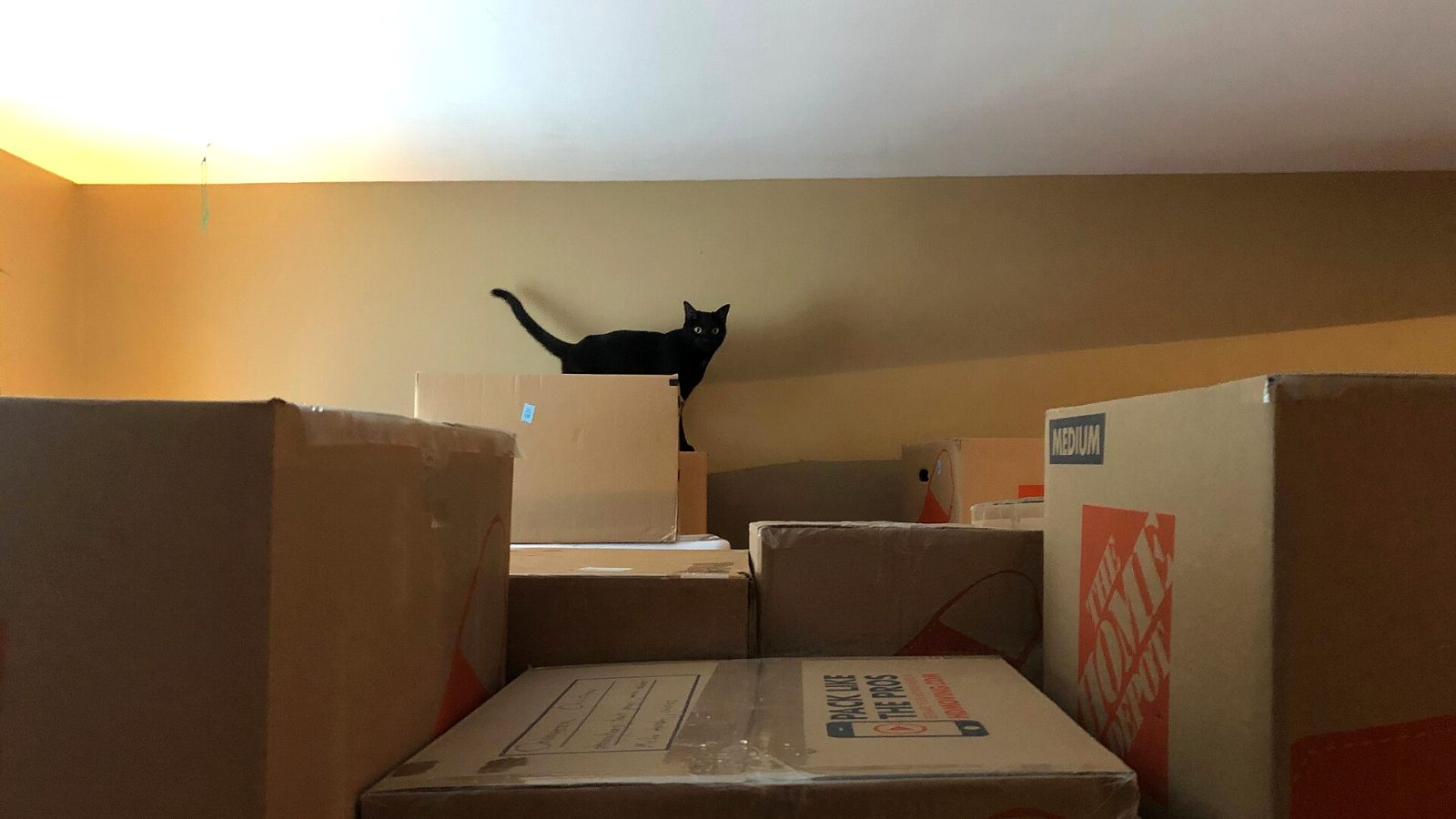
Featured image: Martha Cat and moving boxes (). Photo: Paulo O from Halifax, Canada (CC BY 2.0), via Wikimedia Commons.