Cats hide illness, so act on small changes, and treat a short list of signs as emergencies. Call a vet immediately, day or night, for: straining in the litter tray with little or no urine, open-mouth or laboured breathing, collapse or inability to stand, seizures, repeated vomiting, known or suspected poisoning (including lilies, antifreeze and human painkillers), major injury, or sudden hind-leg weakness with crying. A cat that has not eaten for 24 hours also needs prompt attention.
How urgent is it?
| Sign | Urgency |
|---|---|
| Straining to urinate, crying in the tray, especially a male cat | Emergency now |
| Open-mouth breathing, fast or laboured breathing at rest | Emergency now |
| Collapse, seizure, sudden paralysis of the back legs | Emergency now |
| Suspected poisoning or lily contact | Emergency now; do not wait for symptoms |
| Repeated vomiting, or vomiting with lethargy | Same day |
| Not eating for 24 hours | Same day |
| Hiding, not grooming, hunched posture | Within a day or two |
| Drinking or urinating more than usual | Within a few days |
| Weight loss, bad breath, messy coat | Book an appointment |
| Older cat: night-time yowling, confusion, weight loss with a big appetite | Book an appointment; thyroid, kidney and blood pressure checks |
If you are unsure, phone the practice; they would rather triage a call than see a cat too late. This is general information, not a diagnosis.
Cats conceal illness, a survival trait that works against them as pets. By the time something is obvious it is often well established, which is why knowing the warning signs matters.
This is general information, not veterinary advice. If you are worried about your cat, call your vet – they would far rather hear from you unnecessarily than too late.
Emergency – call a vet immediately, day or night
- Straining to urinate, frequent trips to the tray producing little or nothing, crying in the tray. In male cats this can be a urinary blockage, which is fatal within a day or two. This is the single most important item on this list.
- Difficulty breathing: open-mouth breathing, rapid shallow breaths, breathing with the abdomen, blue or pale gums.
- Collapse, seizure or sudden inability to stand.
- Sudden hind limb weakness or dragging, often with crying and cold back legs – a possible blood clot, which is extremely painful and urgent.
- Repeated unproductive vomiting or retching.
- Suspected poisoning – lilies, antifreeze, human medication, rodenticide. Lily exposure in particular is an emergency even if the cat only brushed the pollen.
- Trauma: a fall, a road accident, a suspected bite wound, even if the cat seems fine afterwards.
- Uncontrolled bleeding.
- Not eating at all for 24 hours, especially in an overweight cat – cats can develop serious liver problems quickly when they stop eating.
- A string or thread visible at the mouth or under the tail. Do not pull it; go to a vet.
- Severe pain: crying, hiding and refusing to be touched.
Call within a day or two
- Reduced appetite or increased appetite lasting more than a day or two
- Increased drinking and urinating – a common early sign of kidney disease, diabetes or thyroid problems
- Weight loss, even if the cat is eating well
- Vomiting more than occasionally, or any diarrhoea lasting more than 24 to 48 hours
- Lethargy or hiding more than usual
- Limping or reluctance to jump up
- Bad breath, drooling or difficulty eating, which usually means dental disease
- Lumps, swellings or wounds
- Discharge from eyes or nose, sneezing, coughing
- Overgrooming, bald patches or scabby skin
- Toileting outside the litter tray, which is a medical sign far more often than a behavioural one
- Any sudden change in temperament, particularly new irritability

Signs specific to older cats
Night vocalising, disorientation, soiling in the house and changes in sleep pattern can indicate cognitive decline, but also hyperthyroidism, high blood pressure, kidney disease and arthritis – all common and all treatable to some degree. Older cats benefit from twice-yearly check-ups rather than annual ones.
What to check at home weekly
Weigh the cat monthly – a kitchen scale and a carrier works. Look at the gums: healthy ones are pink and moist. Run your hands over the body for lumps. Note appetite, water intake, litter tray output and energy level. Cats are small, and a 300g loss is proportionally large.
Why early matters
Kidney disease, hyperthyroidism, diabetes and dental disease are all common in cats, all progress quietly, and all respond far better to early treatment. A cat that seems slightly off for a fortnight is worth a consultation; waiting for an obvious symptom usually means waiting for a worse outcome.
Be ready before you need to be
Keep your vet number and the out-of-hours emergency number somewhere you can find them at 2am. Know where the nearest emergency practice is. Keep the carrier accessible rather than in a loft. And if you are unsure whether something counts as urgent, phone and describe it – triage over the phone is free and it is what practices are there for.
The Emergency List vs the This-Week List
Cat owners need two mental lists, because cats hide illness until it is advanced. Same-day emergencies: straining in the litter box producing nothing (a blocked male cat can die within 48 hours), open-mouth breathing or panting, sudden hind-leg paralysis, repeated unproductive vomiting, known toxin exposure (lilies above all; a pollen dusting can destroy feline kidneys), and any fast, laboured breathing at rest. Book-this-week signals: drinking noticeably more, weight change you can feel over the ribs, bad breath beyond fishy, hiding beyond a day, overgrooming, and the 24-hour food strike, which in cats risks liver complications fast.
Know your cat’s baselines now
Red flags only work against a known normal. Once a month, note resting breathing rate (under 30 breaths a minute while asleep is typical), body feel over ribs and spine, water intake pattern, and litter box output while scooping, a habit that pairs with the setup in litter box problems. Thirty seconds of baseline beats a vague “something seems off” when the vet asks what changed, and behaviour baselines from body language complete the picture.
Related guides
- Cat Not Eating? How Long Is Too Long and What to Do
- Cat Separation Anxiety: Signs and Solutions
- Cat Vomiting White Foam: Causes and When to Worry
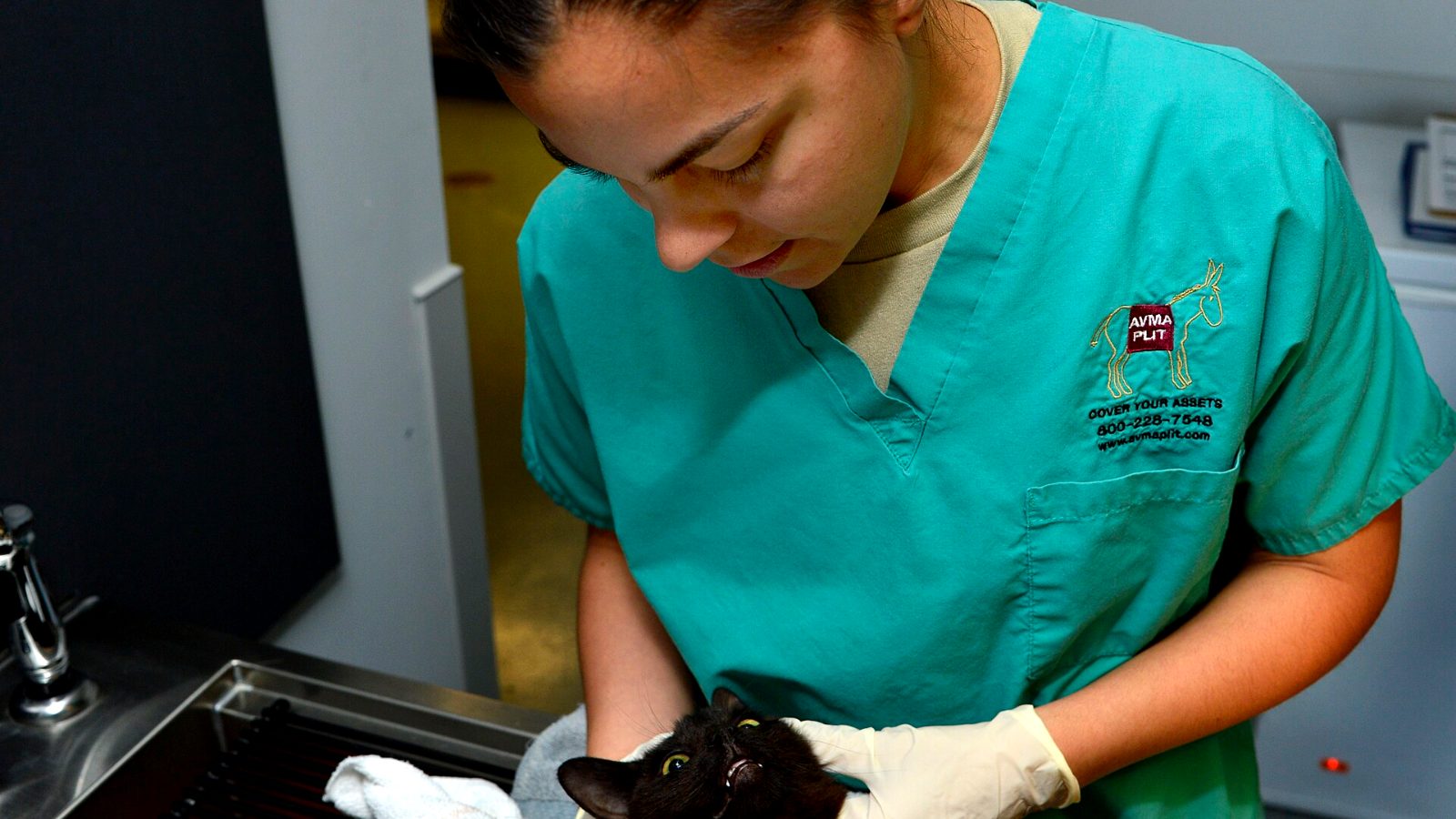
Featured image: Veterinary Clinic -F-VJ-. Photo: Senior Airman Jared Duhon (Public domain), via Wikimedia Commons.