Cats are often described as indifferent to absence, which is why separation-related distress in cats is under-recognised. Research suggests a meaningful minority of cats show separation-related behaviours, and single-cat indoor households are over-represented.
Signs to look for
Behaviours that appear specifically when you are out or about to leave:
- Excessive vocalising after you go – often only discovered via a pet camera or a neighbour
- Toileting outside the tray, frequently on your bed or clothing
- Destructive scratching at doors or around the exit route
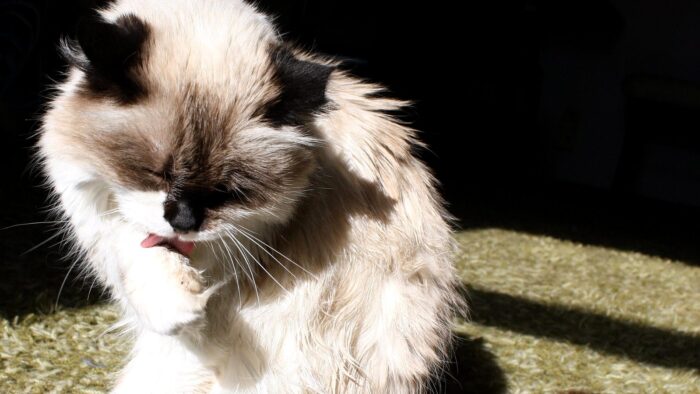
- Overgrooming, sometimes to the point of bald patches
- Not eating while you are out, then eating immediately on your return
- Agitation as you pick up keys or put on shoes
- Over-the-top greeting, clinging and following you room to room
- Vomiting or diarrhoea associated with absences
A pet camera is the single most useful diagnostic tool here, because most of these behaviours happen when nobody is watching.
Rule out medical causes first
This matters. Toileting outside the tray can be cystitis or kidney disease. Overgrooming can be pain, allergy or parasites. Vocalising can be hyperthyroidism or, in older cats, cognitive decline. Appetite changes have many medical causes. Book a vet check before treating anything as behavioural – treating a medical problem as anxiety wastes time and leaves the cat uncomfortable.
What contributes to it
Early separation from the mother and littermates, hand-rearing, a single-cat household with little enrichment, a sudden change in routine such as returning to the office, rehoming or bereavement, and some breeds that are more socially dependent. Cats that were under-socialised as kittens or that have no outlet for normal behaviour are more vulnerable.
What helps
Enrich the environment so absence is less empty. This is the foundation. Puzzle feeders timed to your departure, hidden food around the house, a window perch with a view, a bird feeder outside, rotating toys, and plenty of vertical space. A cat with something to do copes far better.
Make departures boring. No drawn-out goodbyes and no dramatic greetings. Leave and return calmly. The contrast between a big farewell and an empty house is part of what makes the absence stressful.
Decouple the departure cues. Pick up your keys and sit down. Put your coat on and make a cup of tea. Repeated a few times a day, these stop predicting absence.
Build up short absences. Leave for two minutes, return calmly. Then five, then fifteen. Only increase when the shorter duration causes no reaction.
Keep the routine predictable. Feed, play and interact at consistent times. Cats cope much better with absence when the rest of the day is reliable.
Play before you leave. A good hunting session followed by a meal leaves most cats ready to sleep rather than pace.
Leave scent. A worn T-shirt in the cat bed is reassuring.
Background sound. Quiet radio or music masks startling outside noises for some cats.
Things that do not help
Punishment of any kind, including scolding over toileting, makes anxiety worse and damages trust. Getting a second cat as a cure is a gamble – it sometimes helps and sometimes creates a second problem, and should only be done with a slow, structured introduction for its own reasons.
When to get professional help
If the behaviour is severe, if the cat is injuring itself through overgrooming, if it is not eating, or if the changes above have not helped within a few weeks, speak to your vet. They can rule out medical causes properly and refer you to a qualified feline behaviourist. In some cases, medication prescribed by a vet alongside a behaviour plan is appropriate – that is a decision for your vet, based on examining your cat.
Departures and Returns: The Training That Works
Separation-anxious cats are trained, accidentally, by dramatic exits and reunions. The fix reverses the training. Make departures boring: no farewell ritual, keys picked up at random times without leaving, coat on and off while staying home, until the cues stop predicting absence. Make returns equally flat: ignore the cat for the first few minutes, then greet calmly once settled. Meanwhile build positive associations with alone time: a food puzzle that appears only when you leave gives the departure a silver lining, and a worn t-shirt in the cat’s favourite bed keeps your scent present. Most cats improve within two to three weeks of consistent practice, faster when daily hunt-style play drains energy before the longest absence.
When it is not separation anxiety
Overnight yowling, especially in cats past ten, can be cognitive decline, thyroid disease or high blood pressure rather than loneliness, and protest behaviour that starts suddenly in a previously settled cat deserves the symptom check in cat health red flags before a behaviour plan. Rule out medical first; it is the step every behaviourist insists on.
Related guides
- Cat Not Eating? How Long Is Too Long and What to Do
- How to Reduce Pet Anxiety Naturally
- Why Is My Cat Sleeping So Much? Normal Hours and Warning Signs
Featured image: Waiting for you. Photo: Chiffkinney1000! (CC BY-SA 4.0), via Wikimedia Commons.